الوضع الليلي


 1:36:24
  2023-05-15
  1714
1714
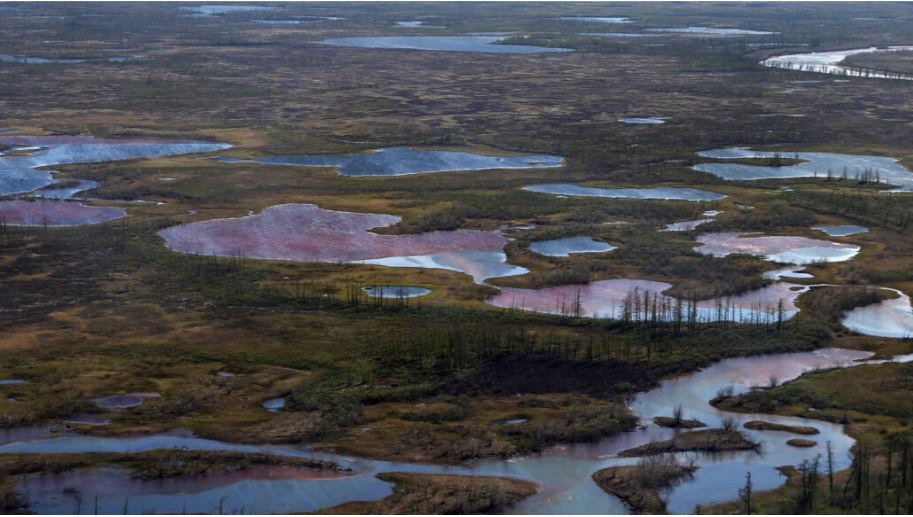
Thawing permafrost may unleash industrial pollution across the Arctic
As the Arctic’s icebound ground warms, it may unleash toxic substances across the region.
By the end of the century, the thaw threatens to destabilize facilities at more than 2,000 industrial sites, such as mines and pipelines, and further compromise more than 5000 already contaminated areas, researchers report March 28 in Nature Communications.
Those numbers come from the first comprehensive study to pinpoint where Arctic permafrost thaw could release industrial pollutants. But there are probably even more contaminated areas that we don’t know about, says permafrost researcher Moritz Langer of the Alfred Wegener Institute in Potsdam, Germany. “We only see the tip of the iceberg.”
Toxic substances released from these locations could jeopardize fish and other animals living in Arctic waterways, as well as the health of people who depend on them.
Permafrost is any soil, sediment or rock that remains frozen for at least two years. Step on the ground in the Arctic and chances are that permafrost lies underfoot. For decades, people have treated the frozen earth as staunch and largely immobile. Industries constructed infrastructure atop its firmness, and within it they buried their refuse and sludge. In some places, scientists and others have used permafrost to store radioactive waste.
But the Arctic is warming nearly four times as fast as the rest of the planet as a result of climate change, and as much as 65 percent of the region’s permafrost may disappear by 2100.
That could release some worrisome things, says climate scientist Kimberley Miner of NASA’s Jet Propulsion Laboratory in Pasadena, Calif., who wasn’t involved in the study. In 2021, Miner and her colleagues warned that the thawing of Arctic permafrost could release antibiotic-resistant bacteria, viruses and radioactive waste from nuclear-testing programs into the environment.
Keen to identify where the warming could spread industrial pollutants, Langer and his colleagues first analyzed the range of Arctic permafrost and whereabouts of industrial infrastructure. They identified about 4,500 sites — including oil fields, mines and abandoned military installations — in places where permafrost probably exists. Next, the team used contamination data from Alaska and Canada — regions with accessible records — and found that as of January 2021, about 3,600 contaminated locations occupy the two regions. These include waste areas and places where pollutants were accidentally released.
Realistically, these numbers are probably deflated, Langer says, because many incidents of contamination have probably gone undocumented.
Reality Of Islam |
|

A new gener

Building a
Now in spac

NASA’
 9:3:43
2018-11-05
9:3:43
2018-11-05
10 benefits of Marriage in Islam
7:5:22
2019-04-08
benefits of reciting surat yunus, hud &
9:45:7
2018-12-24
advantages & disadvantages of divorce
11:35:12
2018-06-10
6:0:51
2018-10-16
a hero waters thirsty wild animals
9:4:9
2022-01-06
7:34:7
2023-02-28
8:4:21
2022-01-08
10:43:56
2022-06-22
1:34:8
2022-02-01
8:15:37
2023-02-16
bahlool & the throne of haroun rashid
8:20:35
2018-06-21
5:41:46
2023-03-18
| LATEST |
 HOME
HOME