
الوضع الليلي


 12:28:35
 2026-01-17
 2202
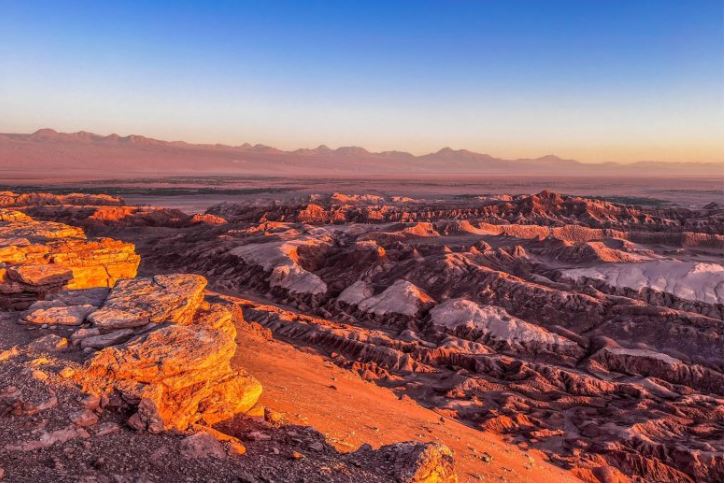
Life beneath the surface of one of the driest places on Earth may be far more complex than once believed.
Researchers have found that soil can support surprisingly robust and varied forms of life even in environments marked by extreme dryness. In a new investigation, an international team led by scientists from the university of Cologne studied microscopic nematodes living in the Atacama Desert of Chile. This region, often compared with the polar areas, is recognized as one of the driest places on the planet.
The Atacama’s severe lack of rainfall, combined with highly saline soils and dramatic temperature swings, creates conditions that are exceptionally challenging for living organisms. Despite this, researchers from zoology, ecology, and botany identified multiple survival strategies that allow different nematode species to endure these extremes. Their findings are detailed in a study recently published in Nature Communications, which offers new insight into how environmental factors shape patterns of biodiversity.
Nematodes rank among the most widespread organisms found in soils worldwide and include a vast range of species. They are essential to ecosystem function, helping control bacterial populations, supporting nutrient cycling, and serving as reliable indicators of soil health. Their adaptability is underscored by the wide range of habitats they occupy, from the deep ocean and polar environments to soils with exceptionally high salt concentrations.
Why Extreme Soils Matter
“Soils are important for the performance of an ecosystem, for example, for carbon storage and nutrient supply. This is why understanding the organisms, i.e. not microbes, but multicellular animals, that live there is so important,” says Dr Philipp Schiffer from the University of Cologne’s Institute of Zoology and one of the authors of the study. “Data on soils in extreme ecosystems such as the Atacama Desert is still scarce.”
The scientists involved in the study are members of the Collaborative Research Centre 1211 “Earth – Evolution at the Dry Limit”, a long running research initiative that has focused on the Atacama Desert for many years. For this project, the team chose six locations across the desert that represented a wide range of environmental conditions.
These included higher elevation areas with more moisture and plant growth, salt-rich regions exposed to intense ultraviolet radiation, and fog-influenced oases that support an unexpectedly diverse plant community. Soil samples were collected from sand dunes, salt lakes, river beds, and mountainous terrain, then analyzed to assess nematode diversity, reproductive modes, and population structure.
Elevation, Water, and Reproductive Strategies
The analysis revealed clear patterns linked to local conditions. At higher elevations, nematode communities were dominated by species that reproduce without sexual reproduction, lending support to the idea that asexual reproduction offers advantages in extreme environments.
Species diversity was also closely tied to water availability, with greater precipitation associated with more diverse communities. In addition, temperature differences played an important role in shaping which nematode populations were able to persist in each region.
The results of the study show that resilient soil ecosystems can exist despite extreme conditions and in very remote locations. This indicates that biodiversity in other arid regions may be higher than previously assumed. On the other hand, the findings also provide warning signals: “In some of the examined regions, simplified food webs indicate that these ecosystems are already damaged and may therefore be more susceptible to disruptions.”
Implications for Fragile Ecosystems
“In light of increasing global aridity, which is affecting more and more regions worldwide, these results are becoming increasingly relevant. Understanding how organisms adapt in extreme environments and which environmental parameters cause them to spread can help to improve estimation of the ecological consequences of climate change”, says Schiffer.
The results suggest that macroecological patterns such as precipitation gradient or the significant role of altitude can be identified in regions with extreme conditions and also at the genetic level. The study thus represents an important step toward better assessing the responses of soil organisms to environmental changes worldwide.
Reality Of Islam |
|

By filling

Scientists

A simple ch

Researchers
 9:3:43
2018-11-05
10 benefits of Marriage in Islam
7:5:22
2019-04-08
benefits of reciting surat yunus, hud &
9:45:7
2018-12-24
advantages & disadvantages of divorce
11:35:12
2018-06-10
6:0:51
2018-10-16
2:2:13
2022-10-08
4:2:19
2022-10-10
12:47:1
2022-12-20
5:58:12
2021-12-18
9:39:36
2022-12-28
6:0:8
2023-03-19
11:11:59
2023-02-01
5:41:46
2023-03-18
| LATEST |
 HOME






















