الوضع الليلي


 11:55:28
  2026-03-17
  1288
1288
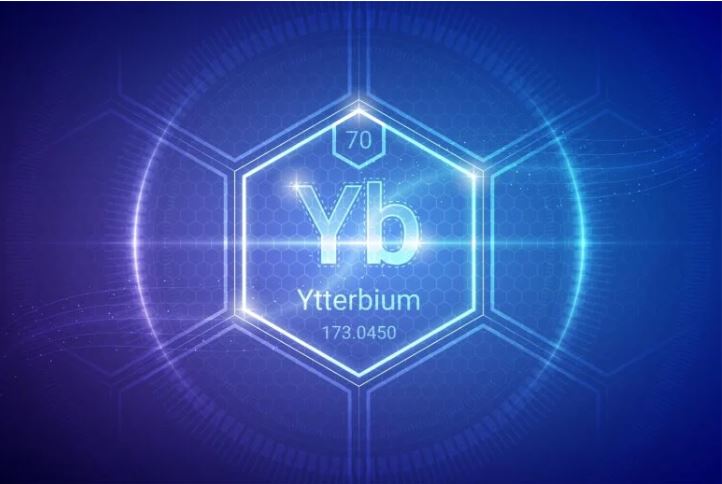
Scientists are exploring a new type of optical atomic clock based on ytterbium-173 ions that could help define the future standard for measuring time.
For decades, cesium atomic clocks have served as the global standard for precise timekeeping. However, scientists expect an even more precise technology to eventually take their place: optical atomic clocks. Within the next several years, these advanced clocks could redefine the second, the base unit of time in the International System of Units (SI). It is still unclear which type of optical clock will ultimately become the new reference.
Researchers at the Physikalisch-Technische Bundesanstalt (PTB) have already developed several optical clock systems. Now scientists believe another design could join them: an optical multi-ion clock that uses ytterbium-173 ions. This system could combine the exceptional accuracy achieved with individual ions and the improved stability that comes from measuring several ions at once. The work is the result of a collaboration between PTB and the Thai metrology institute NIMT.
The research team, led by Tanja Mehlstäubler, describes the findings in the journal Physical Review Letters. Beyond improving timekeeping, the results may also contribute to advances in quantum computing and provide new ways to study the internal structure of atoms.
Combining Accuracy and Stability
Different types of optical atomic clocks offer different strengths. Clocks based on a single ion, such as ytterbium-171, are known for extremely high accuracy. Systems that use many particles, such as strontium atoms, tend to provide excellent stability.
Mehlstäubler’s group is working to combine these advantages. The team previously demonstrated a multi-ion clock using indium ions. Researchers are now exploring the same approach using a different isotope, ytterbium-173.
“This isotope has a particularly interesting transition”, explains the physicist.
In atomic clocks, a transition refers to a quantum jump between two energy states inside an atom. This change happens only when the atom interacts with radiation at a specific frequency. Today’s cesium clocks rely on microwave radiation to trigger this process. Optical clocks instead use laser light. Because optical frequencies oscillate about one hundred thousand times faster than microwaves, they allow scientists to divide time into much smaller intervals and measure it with greater precision.
A Long-Lived Excited State
In ytterbium-173, the relevant transition leads to an excited state that lasts an unusually long time.
“This allows us to make more stable measurements,” explains first author Jialiang Yu. “But such transitions usually require strong laser light, which in turn can have major disadvantages.”
However, the atomic nucleus of ytterbium-173 has a unique structure that gives the atom special properties. These characteristics allowed the researchers to overcome typical limitations and even control multiple ions at the same time.
As a result, the team has opened the door to a multi-ion optical clock based on ytterbium that combines the precision of single-ion clocks with the improved stability of systems that use multiple ions. The atom also appears well-suited for use as a multi-qubit platform for quantum information because laser light can manipulate its quantum states with extremely high precision.
Insights Into Fundamental Physics
The ytterbium-173 system may also play an important role in quantum computing research. Because several quantum states can be controlled and encoded at once, the atom could allow researchers to store and process more quantum information simultaneously.
The team also measured the lifetime of the clock state for the first time. This measurement provides valuable information about the structure of the atomic nucleus. It could also enable highly sensitive tests in nuclear physics, including searches for possible effects that fall outside the current standard model of physics.
Reality Of Islam |
|

A new gener
Building a
Now in spac

NASA’
 9:3:43
2018-11-05
9:3:43
2018-11-05
10 benefits of Marriage in Islam
7:5:22
2019-04-08
benefits of reciting surat yunus, hud &
9:45:7
2018-12-24
advantages & disadvantages of divorce
11:35:12
2018-06-10
6:0:51
2018-10-16
6:0:8
2023-03-19
8:15:37
2023-02-16
8:4:21
2022-01-08
9:50:37
2023-02-28
12:10:56
2022-11-17
4:2:19
2022-10-10
al-hussain (peace be upon him)
10:18:1
2022-09-21
5:41:46
2023-03-18
| LATEST |
 HOME
HOME