تاريخ الرياضيات

الاعداد و نظريتها
تاريخ التحليل
تار يخ الجبر
الهندسة و التبلوجي
الرياضيات في الحضارات المختلفة
العربية
اليونانية
البابلية
الصينية
المايا
المصرية
الهندية
الرياضيات المتقطعة
المنطق
اسس الرياضيات
فلسفة الرياضيات
مواضيع عامة في المنطق
الجبر
الجبر الخطي
الجبر المجرد
الجبر البولياني
مواضيع عامة في الجبر
الضبابية
نظرية المجموعات
نظرية الزمر
نظرية الحلقات والحقول
نظرية الاعداد
نظرية الفئات
حساب المتجهات
المتتاليات-المتسلسلات
المصفوفات و نظريتها
المثلثات
الهندسة
الهندسة المستوية
الهندسة غير المستوية
مواضيع عامة في الهندسة
التفاضل و التكامل
المعادلات التفاضلية و التكاملية
معادلات تفاضلية
معادلات تكاملية
مواضيع عامة في المعادلات
التحليل
التحليل العددي
التحليل العقدي
التحليل الدالي
مواضيع عامة في التحليل
التحليل الحقيقي
التبلوجيا
نظرية الالعاب
الاحتمالات و الاحصاء
نظرية التحكم
بحوث العمليات
نظرية الكم
الشفرات
الرياضيات التطبيقية
نظريات ومبرهنات
علماء الرياضيات
500AD
500-1499
1000to1499
1500to1599
1600to1649
1650to1699
1700to1749
1750to1779
1780to1799
1800to1819
1820to1829
1830to1839
1840to1849
1850to1859
1860to1864
1865to1869
1870to1874
1875to1879
1880to1884
1885to1889
1890to1894
1895to1899
1900to1904
1905to1909
1910to1914
1915to1919
1920to1924
1925to1929
1930to1939
1940to the present
علماء الرياضيات
الرياضيات في العلوم الاخرى
بحوث و اطاريح جامعية
هل تعلم
طرائق التدريس
الرياضيات العامة
نظرية البيان

Lazare Nicolas Marguérite Carnot
 المؤلف:
H Dupre
المؤلف:
H Dupre
 المصدر:
Lazare Carnot, Republican Patriot
المصدر:
Lazare Carnot, Republican Patriot
 الجزء والصفحة:
...
الجزء والصفحة:
...
 8-7-2016
 1036
1036




+
-
20
Born: 13 May 1753 in Nolay, Burgundy, France
Died: 2 August 1823 in Magdeburg, Prussian Saxony (now Germany)
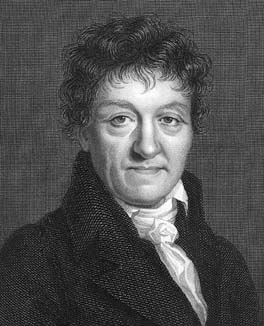
Lazare Carnot graduated from the School of Engineering in Mézières in 1773. In 1778 he wrote Essai sur les machines en général to submit for a prize in a competition. He revised it in 1781 and it was eventually published in 1783. It deals with mechanics and areas of engineering. The following year he declined an invitation to enter the Prussian service and, in the same year he was promoted to captain.
From 1787 he became a member of the Dijon Academy while he was elected to the Legislative Assembly in 1791 and to the National Convention in 1792.
He directed the Army of the North after April 1793 becoming in that year a leading member of the Committee of General Defence and a member of the Committee of Public Safety.
In 1794, under direction from Carnot and Monge, a 'grande école' was set up called 'École centrale des travaux publiques' but its name was changed to 'École Polytechnique' in the following year. Two years later his son Sadi Carnot was born.
The year 1797 was an eventful one for Carnot. In this year he published his famous text Réflexions sur la métaphysique du calcul infinitésimal. The book is introduced with the words:-
As however everything indicates that there will be a new turn in the culture of mathematics, the author deems it apposite to publish this monograph.
Carnot's approach to mathematics shows strongly his engineering background. Thiele writes in [13] that he
accepted mathematical expressions only insofar as the quantities contained in them were real and the operations involved held meaning. ... to Carnot negative quantities are impossible, and zero, just like infinity, is a limit. ... infinitely small quantities are real objects, being representable as differences between limits...
In the same year, 1797, the political situation in France became such that he could no longer remain with his strong republican views, and he fled to Switzerland going on to Nuremberg in Germany.
The following year Carnot returned to France when Napoleon became First Consul. He became Napoleon Bonaparte's minister of war for a period of five months and was promoted further to the rank of lieutenant-general.
Carnot is best known as a geometer. In 1801 he published De la correlation des figures de géométrie in which he tried to put pure geometry into a universal setting. He showed that several of the theorems of Euclid's Elements can be established from a single theorem.
In 1803 he published Géométrie de position in which sensed magnitudes were first used systematically in geometry. This work greatly extended his work of 1801 and in it Carnot again shows what quantities mean to him writing:-
Every quantity is a real object such that the mind can grasp it or at least its representation in calculation.
Carnot's military masterpiece De la défense des places fortes was published in 1809. He later served as military governor of Antwerp but after Napoleon's final defeat at Waterloo he went into exile. He fled to Magdeburg, after going first to Warsaw, arriving in Magdeburg in November 1816.
Carnot's interests turned toward the steam engine with the first steam engine coming to Magdeburg in 1818. His son Sadi Carnot visited him in Magdeburg in 1821 and it is clear that Lazare Carnot influenced his son. Sadi Carnot published his masterpiece on the thermodynamics of the steam engine three years later.
- C S Gillespie, Biography in Dictionary of Scientific Biography (New York 1970-1990).
http://www.encyclopedia.com/doc/1G2-2830900790.html - Biography in Encyclopaedia Britannica.
http://www.britannica.com/eb/article-9020416/Lazare-Carnot
Books:
- H Dupre, Lazare Carnot, Republican Patriot (1975).
- C C Gillispie, Lazare Carnot Savant : a monograph treating Carnot's scientific work, with facsimile reproduction of his unpublished writings on mechanics and on the calculus, and an essay concerning the latter by A P Youschkevitch (Princeton, 1971).
- J Harthong, Lazare Carnot et le calcul infinitésimal, Séminaires de mathématiques. Science, histoire, société (Rennes, 1984).
Articles:
- H Barreau, Lazare Carnot et la conception leibnizienne de l'infini mathématique, La mathématique non standard (Paris, 1989), 43-82.
- C B Boyer, Carnot and the concept of deviation, The American Mathematical Monthly 61 (1954), 459-463.
- E-J Giessmann, Lazare Carnot : Biografischer Abriss aus Anlass der Centennars der Überführung in das Pantheon zu Paris, 200 Jahre Grosse Französische Revolution, Wiss. Z. Tech. Univ. Magdeburg 33 (2) (1989), 3-15.
- T Hänseroth and K Mauersberger, Lazare Carnots Werk im Lichte der Herausbildung der Bau- und Maschinenmechanik in Frankreich, 200 Jahre Grosse Französische Revolution, Wiss. Z. Tech. Univ. Magdeburg 33 (2) (1989), 45-54.
- R Irrgang, Lazare Carnots naturwissenschaftliche Schriften, 200 Jahre Grosse Französische Revolution, Wiss. Z. Tech. Univ. Magdeburg 33 (2) (1989), 55-60.
- D Krone, Leben und Wirken von Lazare Carnot aus der Sicht seines Biographen Wilhelm Körte, 200 Jahre Grosse Französische Revolution, Wiss. Z. Tech. Univ. Magdeburg 33 (2) (1989), 23-27.
- H Meyer, Unendlichkeitsbegriff und Infinitesimalrechnung im Denken Lazare Carnots, 200 Jahre Grosse Französische Revolution, Wiss. Z. Tech. Univ. Magdeburg 33 (2) (1989), 61-62.
- R Thiele, A French officer in Prussian Magdeburg, The Mathematical Intelligencer 15 (1) (1993), 53-57.
- R Thiele, Carnots Betrachtungen über die Grundlagen der Infinitesimalrechnung, in Rechnen mit dem Unendlichen (Basel, 1990), 79-94.
- A P Youschkevitch, L Carnot and the competition at the Berlin Academy of Sciences in the year 1786 on the topic of the mathematical theory of the infinite (Russian), Studies in the history of mathematics 18 (Moscow, 1973), 132-156.
 الاكثر قراءة في 1750to1779
 اخر الاخبار
اخبار العتبة العباسية المقدسة

الآخبار الصحية


 قسم الشؤون الفكرية يصدر كتاباً يوثق تاريخ السدانة في العتبة العباسية المقدسة
 "المهمة".. إصدار قصصي يوثّق القصص الفائزة في مسابقة فتوى الدفاع المقدسة للقصة القصيرة
 (نوافذ).. إصدار أدبي يوثق القصص الفائزة في مسابقة الإمام العسكري (عليه السلام)