MATERIAL PROCESSES OF DOING AND HAPPENING
FORCE
The notion of agency is a complex one, which includes such features as animacy, intention, motivation, responsibility and the use of one’s own energy to initiate or control a process. In central instances, all these features will be present. In non-central instances, one or more of these features may be absent. If we say, for example, that the horse splashed us with mud as it passed we do not imply that the horse did so deliberately. We do not attribute intentionality or responsibility or motivation to the horse in this situation. We might call it an ‘unwitting Agent’.
The higher animals, and especially pets, are often treated grammatically as if they were humans. Nevertheless, rather than devise a different term for every sub-type of agency we will make just one further distinction: that between animate and inanimate Agents. This is useful in order to account for such natural phenomena as earthquakes, lightning, electricity, avalanches, the wind, tides and floods, which may affect humans and their possessions. They are inanimate, and their power or energy cannot therefore be intentional. They can instigate a process but not control it. This non-controlling entity we call Force; it will include such psychological states as anxiety, fear or joy.
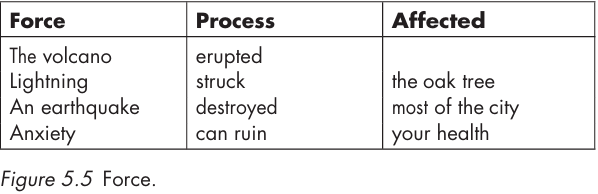
In the following description, the subject in italics realizes the role of Force and most of the verbs encode material processes:
The cold crept in from the corners of the shanty, closer and closer to the stove. Icy-cold breezes sucked and fluttered the curtains around the beds. The little shanty quivered in the storm. But the steamy smell of boiling beans was good and it seemed to make the air warmer.
(Laura Ingalls Wilder, The Long Winter)








