Grammar
Tenses
Present

Present Simple
Present Continuous
Present Perfect
Present Perfect Continuous
Past
Past Simple
Past Continuous
Past Perfect
Past Perfect Continuous
Future
Future Simple
Future Continuous
Future Perfect
Future Perfect Continuous
Parts Of Speech
Nouns
Countable and uncountable nouns
Verbal nouns
Singular and Plural nouns
Proper nouns
Nouns gender
Nouns definition
Concrete nouns
Abstract nouns
Common nouns
Collective nouns
Definition Of Nouns
Animate and Inanimate nouns
Nouns
Verbs
Stative and dynamic verbs
Finite and nonfinite verbs
To be verbs
Transitive and intransitive verbs
Auxiliary verbs
Modal verbs
Regular and irregular verbs
Action verbs
Verbs
Adverbs
Relative adverbs
Interrogative adverbs
Adverbs of time
Adverbs of place
Adverbs of reason
Adverbs of quantity
Adverbs of manner
Adverbs of frequency
Adverbs of affirmation
Adverbs
Adjectives
Quantitative adjective
Proper adjective
Possessive adjective
Numeral adjective
Interrogative adjective
Distributive adjective
Descriptive adjective
Demonstrative adjective
Pronouns
Subject pronoun
Relative pronoun
Reflexive pronoun
Reciprocal pronoun
Possessive pronoun
Personal pronoun
Interrogative pronoun
Indefinite pronoun
Emphatic pronoun
Distributive pronoun
Demonstrative pronoun
Pronouns
Pre Position
Preposition by function
Time preposition
Reason preposition
Possession preposition
Place preposition
Phrases preposition
Origin preposition
Measure preposition
Direction preposition
Contrast preposition
Agent preposition
Preposition by construction
Simple preposition
Phrase preposition
Double preposition
Compound preposition
prepositions
Conjunctions
Subordinating conjunction
Correlative conjunction
Coordinating conjunction
Conjunctive adverbs
conjunctions
Interjections
Express calling interjection
Phrases
Sentences
Grammar Rules
Passive and Active
Preference
Requests and offers
wishes
Be used to
Some and any
Could have done
Describing people
Giving advices
Possession
Comparative and superlative
Giving Reason
Making Suggestions
Apologizing
Forming questions
Since and for
Directions
Obligation
Adverbials
invitation
Articles
Imaginary condition
Zero conditional
First conditional
Second conditional
Third conditional
Reported speech
Demonstratives
Determiners
Linguistics
Phonetics
Phonology
Linguistics fields
Syntax
Morphology
Semantics
pragmatics
History
Writing
Grammar
Phonetics and Phonology
Semiotics
Reading Comprehension
Elementary
Intermediate
Advanced
Teaching Methods
Teaching Strategies
Assessment

Derivational processes
 المؤلف:
R.M.W. Dixon
المؤلف:
R.M.W. Dixon
 المصدر:
A Semantic approach to English grammar
المصدر:
A Semantic approach to English grammar
 الجزء والصفحة:
338-10
الجزء والصفحة:
338-10
 2023-04-13
 1474
1474




+
-
20
Derivational processes
We can now examine the range of morphological processes which can be utilized to derive a nominal from a verb.
Using the verb root unchanged (zero derivation) is attested for eight of the nine varieties of nominalization (the exception is Property-nom)
. Unit-nom—many, including jump, throw, chat, offer, laugh, cough, cheer
. Activity-nom—a few, including use
. State-nom—a fair few, including love, envy, delight, interest; see (19)
. Result-nom—a few, including wound, bite, plan
. Object-nom—quite a few, including plant, taste, smell, and those in (25)
. Locus-nom—a few, including track, exit, trap and those in (32)
. Agent-nom—a few, including witness
. Inst-nom—a few, including cart, plaster, veil
Just as a nominalization ending in -ing must be distinguished from the verb in an ING complement clause, so a zero derivation nominalization must be distinguished from the use of the base form of a verb in a GIVE A VERB, HAVE A VERB or TAKE A VERB construction. For instance, the verb borrow does not have a zero derivation nominalization, but it can be used after have a, as in Can I have a borrow of your car for the weekend please? And track is used both as a verb and as a Locus-nom, but not after give a, have a or take a.
Other derivational processes involve the addition of a suffix. Some suffixes do not engender any changes in a root to which they are added; for example, -er, -ing, -ment, -al, -ee. Others are to some degree fused with the root and may involve stress shift and/or phonological changes; these include -ant/-ent, -(t)ion, -ance/-ence, -ure. Deverbal nominalizing suffixes will now be briefly discussed, one at a time.
(i) -er (or -or or -ar), pronounced as / e (r)/. Used only for Agent-nom and Inst-nom. (We find verb pray and Object-nom prayer but these are loans from Old French preier and preiere respectively; the final -er in prayer is not an instance of the nominalizing suffix -er.)
The suffix -er also attaches to some nouns, such as footballer, New Yorker. It is highly productive and is frequently added to a multi-word sequence, as Pacific Islander, clock-watcher and do-gooder.
(ii) -ant (and -ent), pronounced as  (or just as /nt/). Can involve change in root vowel and in stress; for example, preside
  , president
 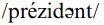 , and reside/resident. The root-final diphthong is dropped from occupy /
  , occupant
  ; see also study/student and supplicate/supplicant. Used for Agent-nom’s and for some Inst-nom’s (including lubricant).
(iii) -ard (or -art), pronounced as  . In most cases, simply added to the root.
(iv) -ing, pronounced as  . Forms five varieties of nominalization:
. Unit-nom—just a few, including happening
. Activity-nom—very many, including running, drowning, trapping, understanding, urging
. State-nom—a few, including liking, rejoicing, craving, longing
. Result-nom—many, which also function as Unit-nom’s, including weaving, wrapping, building, knitting.
. Object-nom doubling as Activity-nom—building
(v) -ation, -ition, -tion, -ion, pronounced as  . Of Romance origin, mostly used on Romance verbs. There is considerable allomorphic variation, of which just the basic outline is sketched here. First, with verbs ending in -ate, -ise/-ize and -ify we get:
— (a) Ending in -ate, /-eit/. Replace final /t/ by  , shift stress to penultimate vowel. For example:

— (b) Ending in -ise/-ize, /aiz/. Add  , with stress shift. For example:

— (c) Ending in -ify /-ifai/. Replace final /ai/ by  with stress shift. For example:

Looking now at other verbs, we find:
— (d) Ending in /t/, /d/ or /s/. One of two possibilities.
(d1)  replaces final t, d or s. For example:

This is shown in various ways in spelling. Final t is sometimes retained, as in desert/ desertion, and sometimes replaced by ss or s, as in permit/permission, convert/ conversion. Final d is sometimes changed to t, as in intend/intention, but more often replaced by s, as in extend/extension. Final ss or s (before e) is generally retained, as in discuss/discussion, confuse/confusion.
(d2) Add  , with vowel change and stress shift. For example:

And compete/competition, oppose/opposition, recite/recitation, accuse/accusation. Note that different processes apply for convert/conversion and converse/conversation; if they did not, the two nominalizations might coincide.
—(e) Ending in /m/, /b/ or /v/; add  with vowel change, retaining /m/ but replacing /b/ or /v/. For example:

And describe/description, perceive/perception. But note that observe/observation is an exception, being of type (f).
Some verbs ending in /v/ replace this by  , with vowel change and stress shift. For example:

and resolve/resolution (which comes from the same Romance root).
— (f) Ending in /l/ or /n/. Generally add  , with stress shift:

And imagine/imagination, resign/resignation, explain/explanation, console/consolation.
Verbs which used to end in /r/, but have now lost this in most dialects, include it before  (as before other suffixes commencing with a vowel). For example:

and consider/consideration, admire/admiration, prepare/preparation.
The suffix derives five varieties of nomination:
. Unit-nom—very, very many, including installation, extension, donation, assassination, promotion, imagination, continuation, and a considerable number from the SPEAKING type, such as declaration, narration, explanation
. State-nom—quite a few, including admiration, inspiration
. Property-nom—a few, including indication, distinction, inclusion
. Result-nom—a few, such as information; and a fair few which also function as Unit-nom, including imitation, solution, decision
. Object-nom—a few, including assumption, supposition, selection, possession
(vi) -ment, pronounced /-m e nt/ (or sometimes just /-mnt/). Another suffix of Romance origin, found mostly with Romance verbs but also with some Germanic verbs, such as amazement, settlement. Used with many verbs which include prefix em-/en- or be-, including embarrassment, endorsement, belittlement. Forms six varieties of nominalization (no more than a few instances of each). Examples include:
. Unit-nom—statement, argument, commencement, postponement
. State-nom—enjoyment, bewilderment, excitement, entertainment
. Property-nom—measurement
. Result-nom—arrangement (also functions as Unit-nom)
. Object-nom—payment
. Locus-nom—settlement, encampment
(vii) -ance/-ence, pronounced  . A further suffix of Romance origin used with many Romance and just a few Germanic verbs (for example, utterance). It can also nominalize adjectives ending in -ent through replacing this with -ence; for example, violent/violence.
Some verbs simply add /-ens/; for example, guide, attend, resist, perform, appear, depend, avoid, assist. Others involve stress shift and vowel change, for example:

A number, ending in -er,  , replace this by
  , for example:

Others, ending in -er  , replace this with
  plus vowel change and stress shift:

Note also utter/utterance, differ/difference, hinder/hindrance, infer/inference. And there is enter/entrance.
This suffix forms six varieties of nominalization; again, there are no more than a few instances of each. Examples include:
. Activity-nom—avoidance, assistance, guidance, attendance, resistance, performance, appearance, remembrance
. State-nom—annoyance, preference
. Property-nom—resemblance, dependence
. Result-nom, and also Unit-nom—utterance
. Locus-nom—residence
. Locus-nom doubling as Unit-nom—entrance
(viii) -y, pronounced as /i/. This is an old Germanic suffix, basically used to form adjectives from nouns; for example leaf-y, risk-y. It also derives a number of nominals from verbs. Most of the verbs end in orthographic -re or -er, phonological  ; the suffix adds /ri/ and sometimes omits the preceding
  ; for example:

With apologize, suffix /i/ substitutes for /aiz/. There are five varieties of nominalization involving -y, each with just a few members. They include
. Unit-nom—apology, enquiry, delivery
. Activity-nom—recovery
. Result-nom—injury
. Object-nom—discovery
. Locus-nom—entry
(ix) -al, pronounced  , almost exclusively with Romance verbs. This is simply added to the root. Approval is a State-nom, and there are a number of Unit-nom’s, including arrival, dismissal, refusal, proposal, deferral, recital and revival.
(x) -ee, pronounced /i:/. Also a Romance suffix, simply added to the root. Almost all examples are Object-nom’s—nominee, employee, lessee, assignee, grantee. Fairly recently, this suffix has been generalized from applying just to an underlying O argument to also describing an underlying S (a special intransitive agentive nominal). Standee (‘someone who stands’) dates from about 1830, escapee from about 1860, and attendee and retiree from about 1940. It appears that all four words were introduced in the USA and have now spread to other English-speaking communities.
(xi) -ure. This suffix, also of Romance origin, has a number of different forms. We find  added to depart,
  to mix and
  to fail. Final /z/ is replaced by
  with enclose and please (the latter also involves a vowel change). This suffix derives four varieties of nominalization:
. Unit-nom—failure, departure
. State-nom—pleasure
. Object-nom—mixture
. Locus-nom—enclosure
(xii) -t. There are old Germanic verb/Object-nom-plus-Unit-nom pairs give/gift and bequeath/bequest, each with the addition of -t plus considerable phonological change. A phonologically similar but etymologically unrelated pair is complain/ complaint, both forms being loans from Old French.
There are just one or two examples of other morphological processes which form nominalizations from verbs. They can usefully be listed according to type of nominalization. (This is not an exhaustive list.)
Unit-nom—analyze/analysis, speak/speech, believe/belief
Activity-nom—grieve/grief, behave/behavior, pretend/pretence
State-nom—hate/hatred
Result-nom and Unit-nom—lose/loss
Object-nom—know/knowledge, lend/loan, bear/burden, choose/choice, favor/favorite, spit/spittle
Object-nom and Unit-nom—think/thought, feed/food
 الاكثر قراءة في Semantics
 اخر الاخبار
اخبار العتبة العباسية المقدسة

الآخبار الصحية


مواضيع ذات صلة
 قسم الشؤون الفكرية يصدر كتاباً يوثق تاريخ السدانة في العتبة العباسية المقدسة
 "المهمة".. إصدار قصصي يوثّق القصص الفائزة في مسابقة فتوى الدفاع المقدسة للقصة القصيرة
 (نوافذ).. إصدار أدبي يوثق القصص الفائزة في مسابقة الإمام العسكري (عليه السلام)