الوضع الليلي


 11:15:19
 2026-04-25
 1659
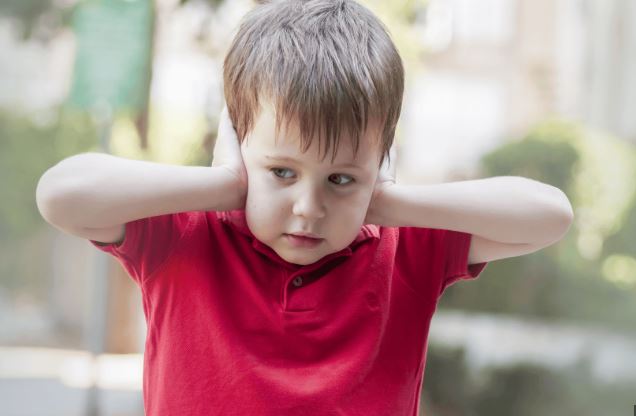
Unlike typically developing children who copy almost everything they see, kids with autism rarely imitate or repeat any nonsensical or silly behavior, according to a small new study.
The findings were published April 8 in the journal Current Biology.
"The data suggest that children with autism do things efficiently rather than socially, whereas typical children do things socially rather than efficiently," Antonia Hamilton of the University of Nottingham, in England, said in a journal news release. "We find that typical children copy everything an adult does, whereas autistic children only do the actions they really need to do."
The study involved 31 children with autism spectrum disorders, an umbrella term for a group of developmental brain disorders that impair a child's ability to communicate and socialize. Thirty typically developing children of similar verbal mental age also participated.
During five tests, the kids were asked to watch closely as a demonstrator took a toy out of a box or assembled an object.
Each time the demonstrator took the lid off of the box, which was considered a necessary action. The demonstrator also tapped on the top of the box twice -- an unnecessary action.
After the boxes were reset, each of the children was asked to retrieve or assemble the toy as quickly as possible. However, the children were not specifically instructed to copy any behavior they had seen, the study authors noted.
Although nearly all of the children completed the assigned task, those who did not have an autism spectrum disorder were much more likely to include the "unnecessary" step, the study revealed. These kids imitated up to 57 percent of these "silly" actions. In contrast, the children with autism imitated only 22 percent of the unnecessary actions.
The researchers concluded that the social nature of imitation is both important and challenging for children with autism. Looking ahead, they said more research is needed to determine exactly what kind of actions children copy, and how this behavior contributes to human cultural transmission of knowledge.
Reality Of Islam |
|

By filling

Scientists

A simple ch

Researchers
 9:3:43
2018-11-05
10 benefits of Marriage in Islam
7:5:22
2019-04-08
benefits of reciting surat yunus, hud &
9:45:7
2018-12-24
advantages & disadvantages of divorce
11:35:12
2018-06-10
6:0:51
2018-10-16
4:2:19
2022-10-10
bahlool & the throne of haroun rashid
8:20:35
2018-06-21
8:15:37
2023-02-16
8:19:41
2018-06-21
2:42:26
2023-02-02
5:58:12
2021-12-18
10:47:11
2022-11-22
5:41:46
2023-03-18
| LATEST |
 HOME