الوضع الليلي


 1:53:58
  2025-08-09
  2012
2012
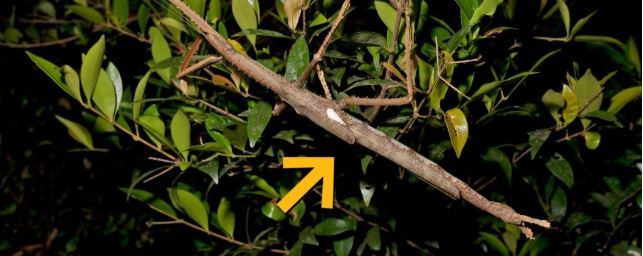
A colossal stick insect found living in the highland rainforest of northeastern Australia could be the chonkiest (read: heaviest) bug the continent has to offer.
Acrophylla alta, as the species has been named, weighs up to 44 grams (1.6 ounces) – comparable to a golf ball. In length, it measures around 41 cm (16 inches) with its legs outstretched, significantly longer than the average human forearm.
"There are longer stick insects out there [in the region], but they're fairly light bodied," says natural scientist Angus Emmott, formerly of Australia's James Cook University, now retired. "From what we know to date, this is Australia's heaviest insect."
The newly discovered bug makes its home high in the canopy of the Atherton Tablelands, a highland rainforest in tropical Queensland in Australia. Here, the trees are old, and can be up to 30 meters (100 feet) high.
Many insect species have been understudied and overlooked, simply because their habitat is so hard for humans to access.
In the case of A. alta, there's another confounding factor: in its natural habitat, the insect is extremely well camouflaged, in spite of its humungous size and weight. Because Atherton is a tropical region, however, weather events such as storms can sometimes rattle insects loose from the canopy. A. alta was discovered because amateur naturalists came across it at lower altitudes than these kinds of insects are typically seen, and uploaded their observations to iNaturalist.
There, they were spotted by entomologist Ross Coupland, who recruited Emmott to investigate the mysterious species.
They managed to observe and collect some specimens – and, crucially for identification, the species' eggs.
"Every species of stick insect has their own distinct egg style," Emmott explains. "They've all got different surfaces and different textures and pitting, and they can be different shapes. Even the caps on them are all very unique."
The insect's hefty weight, the researchers say, could be an adaptation that helps it thrive in the treetops of Atherton, where conditions are cool and wet. A higher body mass reduces the rate at which thermal energy is lost, which could be beneficial for the stick insect's egg development. Further research would be needed to confirm this theory, though.
The research also underscores just how little we know about the world around us, when an insect as chonky as A. alta can evade detection for all this time.
"The discovery of such a large, new species of insect is testament to the importance of protecting remaining, biologically diverse habitats and ecosystems, as there may be further species of phasmid and other insects awaiting discovery and description therein," the researchers write.
Reality Of Islam |
|

A new gener

Building a
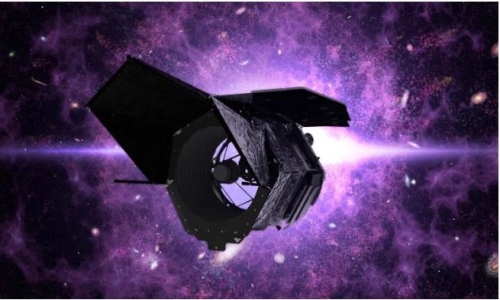
Now in spac
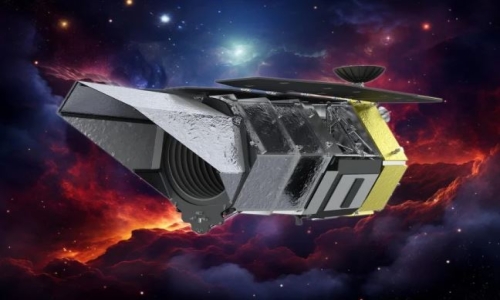
NASA’
 9:3:43
2018-11-05
9:3:43
2018-11-05
10 benefits of Marriage in Islam
7:5:22
2019-04-08
benefits of reciting surat yunus, hud &
9:45:7
2018-12-24
advantages & disadvantages of divorce
11:35:12
2018-06-10
6:0:51
2018-10-16
9:50:37
2023-02-28
10:43:56
2022-06-22
3:18:29
2022-12-24
2:42:26
2023-02-02
8:19:41
2018-06-21
11:2:27
2022-10-06
9:39:36
2022-12-28
5:41:46
2023-03-18
| LATEST |
 HOME
HOME