الوضع الليلي


 11:30:22
  2024-04-26
  3760
3760

Solar sails are an enigmatic and majestic way to travel across the gulf of space. Drawing an analogy to the sail ships of the past, they are one of the most efficient ways of propelling craft in space.
On Tuesday a RocketLab Electron rocket launched NASA's new Advanced Composite Solar Sail System. It aims to test the deployment of large solar sails in low-earth orbit and on Wednesday, NASA confirmed they had successfully deployed a 9 meters sail.
In 1886 the motor car was invented. In 1903 humans made their first powered flight. Just 58 years later, humans made their first trip into space on board a rocket. Rocket technology has changed significantly over the centuries, yes centuries.
The development of the rocket started way back in the 13th century with the Chinese and Mongolians firing rocket propelled arrows at each other. Things moved on somewhat since then and we now have solid and liquid rocket propellant, ion engines and solar sails with more technology in the wings.
Solar sails are of particular interest because they harness the power of sun, or star light to propel probes across space. The idea isn't new though, Johannes Kepler (of planetary motion fame) first suggested that sunlight could be used to push spacecraft in the 17th century in his works entitled 'Somnium'.
We had to wait until the 20h century though before Russian scientist Konstantin Tsiolkovsky outlined the principle of how solar sails might actually work.
Carl Sagan and other members of the Planetary Society started to propose missions using solar sails in the 70's and 80's but it wasn't until 2010 that we saw the first practical solar sail vehicle, IKAROS.
The concept of solar sails is quite simple to understand, relying upon the pressure of sunlight. The sails are angled such that photons strike the reflective sail and bounce off it to push the spacecraft forward.
It does of course take a lot of photons to accelerate a spacecraft using light but slowly, over time it is a very efficient propulsion system requiring no heavy engines or fuel tanks.
This reduction of mass makes it easier for solar sails to be accelerated by sunlight but the sail sizes have been limited by the material and structure of the booms that support them.
NASA has been working on the problem with their Next Generation Solar Sail Boom Technology. Their Advanced Composite Solar Sail System uses a CubeSat built by NanoAvionics to test a new composite boom support structure.
It is made from flexible polymer and carbon fiber materials to create a stiffer, lighter alternative to existing support structure designs.
On Wednesday 24 April, NASA confirmed that the CubeSat has reached low-Earth orbit and deployed a 9 meter sail. They are now powering up the probe and establishing ground contract. It took about 25 minutes to deploy the sail which spans 80 square meters.
If the conditions are right, it may even be visible from Earth, possibly even rivalling Sirius in brightness.
Reality Of Islam |
|

A new gener
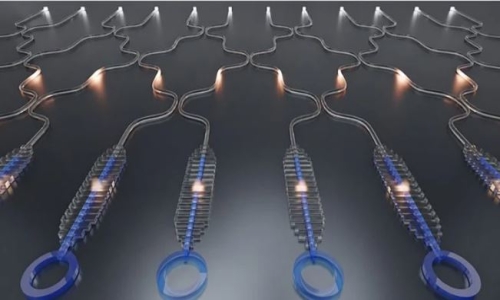
Building a
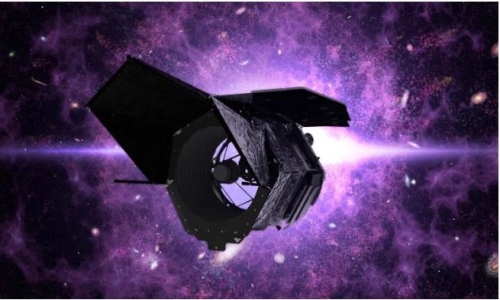
Now in spac
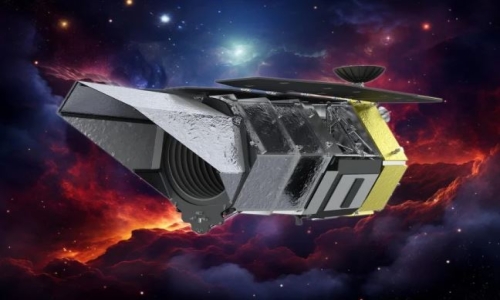
NASA’
 9:3:43
2018-11-05
9:3:43
2018-11-05
10 benefits of Marriage in Islam
7:5:22
2019-04-08
benefits of reciting surat yunus, hud &
9:45:7
2018-12-24
advantages & disadvantages of divorce
11:35:12
2018-06-10
6:0:51
2018-10-16
9:42:16
2022-10-19
7:0:55
2022-05-17
11:2:27
2022-10-06
7:34:7
2023-02-28
7:59:14
2018-06-21
6:14:17
2018-06-21
12:47:1
2022-12-20
5:41:46
2023-03-18
| LATEST |
 HOME
HOME