الوضع الليلي


 10:25:4
  2024-04-15
  1839
1839
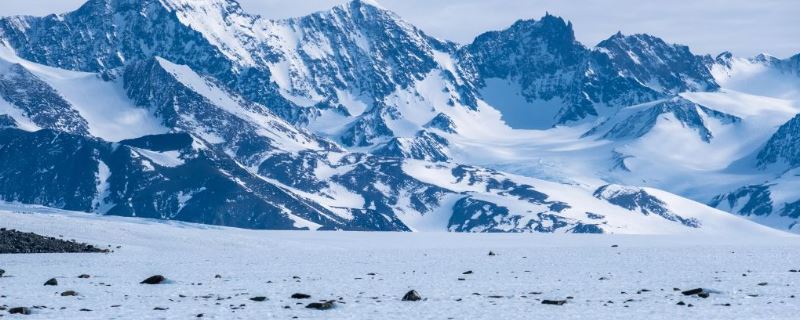
Antarctica is a wonderland of stardust.
There, amid the pristine whiteness of the ice and snow, scientists have retrieved more than 48,000 meteorites that have fallen to Earth over perhaps millions of years.
But the reservoir isn't going to last forever. New analysis suggests that warming temperatures are making the ice softer, resulting in meteorites sinking deep beyond our reach.
Over coming decades we could be losing some 5,000 meteorites per year – an archive of the Solar System and potentially interstellar space disappearing forever.
Meteorites represent an unparalleled resource for studying our little corner of the Milky Way. They consist of chunks of asteroid that formed in the early days of the Solar System, or pieces of another planet or our own Moon that got knocked loose and hurtled in our direction. Some even contain interstellar material that predates the solar system entirely.
In addition to thousands of tons of space dust that sprinkle endlessly from the sky, these chunks of rock fall to Earth with some regularity. They're not more likely to end up in Antarctica than anywhere else, but a relatively featureless, frozen wasteland is the ideal spot to go hunting.
There, the contrast between dark chunks of rock and the white ice makes meteorites much easier to find. There also aren't many terrestrial rocks laying about on top of the ice, so if you do find a stone, odds are good that it's from space. Finally, the cold, dry desert environment means that meteorites are better preserved in Antarctica, so even if a meteorite has been sitting there for some time, it's likely to be in good condition.
Because meteorites are more likely to lie undisturbed in Antarctica, the objects found there don't just constitute little databases that can tell us about other worlds, or the early Solar System. They can help scientist figure out the rate at which meteorites smack into our world, which is incredibly important when it comes to defending Earth against potentially hazardous impacts.
Scientists retrieve on average some 1,000 meteorites from Antarctica every year. Recently, a team of scientists led by glaciologists Veronica Tollenaar of the Université libre de Bruxelles and Harry Zekollari of ETH Zürich compiled a map of where these rocks are most likely to be found, and how many are waiting, finding that somewhere between 300,000 and 850,000 meteorites could speckle the frozen continent, many up to a million years old.
Now the researchers have taken their work a step further, with new estimates for how long those meteorites will just hang around waiting to be collected. The prognosis is not a good one.
We know, based on prior studies, that the concentration of Antarctic meteorites is incredibly sensitive to temperature. The team's previous research showed that almost no meteorites have been found where surface temperatures exceed -9 degrees Celsius (15.8 Fahrenheit) for even brief periods. Modeling has also shown that meteorites can sink into the ice at temperatures above -10 degrees Celsius (14 Fahrenheit).
The researchers used a machine learning algorithm to quantify how many meteorites are going to be lost beneath the ice as temperatures rise, at current and projected rates of warming. They found that, even at conservative warming rates, we're going to lose thousands of meteorites per year.
Under current emissions policies, which project warming to reach up to 2.7 °C above pre-industrial levels, 28 to 30 percent of the meteorites in Antarctica could be lost by 2050. In some regions, this quantity could be 50 percent; and, under the higher emissions scenarios of up to 5.2°C of warming above pre-industrial levels by 2100, up to 76 percent of Antarctica's meteorites will sink beneath the ice in coming decades.
"The ongoing loss of Antarctic meteorites is a consequence of climate change," the researchers write in their paper.
"Rapidly and purposefully collecting all meteorites is necessary to preserve the information on our Solar System that each additional sample contains: for example, information on the emergence of life on Earth through the delivery of water and organic matter, and how the Moon was formed. A concerted effort would be similar in spirit to what is currently done in ice core research, where ice samples collected from vanishing, yet unique, glaciers – such as the few remaining tropical glaciers – are stored in long-term archives.
"Ultimately, however, the only way to preserve the remaining unrecovered Antarctic meteorites is to rapidly reduce greenhouse gas emissions."
Reality Of Islam |
|

A new gener

Building a
Now in spac
NASA’
 9:3:43
2018-11-05
9:3:43
2018-11-05
10 benefits of Marriage in Islam
7:5:22
2019-04-08
benefits of reciting surat yunus, hud &
9:45:7
2018-12-24
advantages & disadvantages of divorce
11:35:12
2018-06-10
6:0:51
2018-10-16
2:11:12
2022-10-15
8:39:51
2022-09-23
the happy life of mankind requirement
6:36:36
2022-01-25
10:35:40
2022-05-26
4:2:19
2022-10-10
12:10:56
2022-11-17
10:47:11
2022-11-22
5:41:46
2023-03-18
| LATEST |
 HOME
HOME