الوضع الليلي


 6:4:7
6:4:7  2024-04-13
  1614
1614
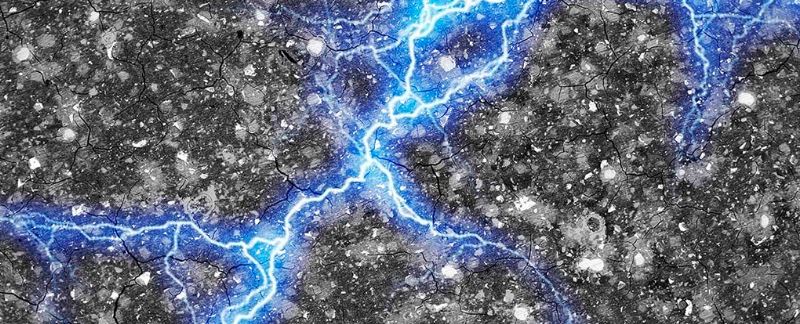
Scientists are constantly searching for better ways to store renewable energy, and MIT researchers have now found a way to turn cement and an ancient material into a giant supercapacitor.
Potentially, this electrified cement could turn building foundations and roads into almost limitless batteries.
To create the new substance, a team from the Massachusetts Institute of Technology (MIT) and Harvard University in the US mixed together cement, water and carbon black– a material like a fine charcoal that is created from incomplete combustion processes.
"The material is fascinating, because you have the most-used human made material in the world, cement, that is combined with carbon black, that is a well-known historical material – the Dead Sea Scrolls were written with it," says Admir Masic, a materials scientist at MIT.
"You have these at least two-millennia-old materials that when you combine them in a specific manner you come up with a conductive nanocomposite, and that's when things get really interesting."
The particles of carbon black tend to clump together in voids left as water is absorbed by the reacting cement, forming tendril-like shapes in the cement that can act as wires.
That aids conductivity, meaning that the modified cement is able to act as a supercapacitor – a power source that works in a similar way to a battery, but which stores and releases electrical energy much faster.
A standard electrolyte material, such as potassium chloride, can then be added to the material, providing the charged particles that separate – thus allowing the supercapacitor to store and release energy.
Right now, these cement capacitors are relatively small, with enough power to light up a few LED lightbulbs. The materials used are cheap and abundant though, and in theory the process should be able to scale up relatively well.
Next, the team wants to make one of these devices that's about the size of a car battery.
A house with a foundation made of the supercapacitor cement could store enough energy to power that house for a day, the researchers suggest – and the energy could be produced through renewable sources such as solar or wind.
The mixture could also be deployed on roads to power electric vehicles as they pass over (an innovation that several research projects are looking at). There is a trade-off between storage capacity and structural strength, but the cement can be adapted for different use cases depending on the need.
"These properties point to the opportunity for employing these structural concrete-like supercapacitors for bulk energy storage in both residential and industrial applications ranging from energy autarkic shelters and self-charging roads for electric vehicles, to intermittent energy storage for wind turbines," write the researchers in their published paper.
Reality Of Islam |
|

A new gener
Building a
Now in spac
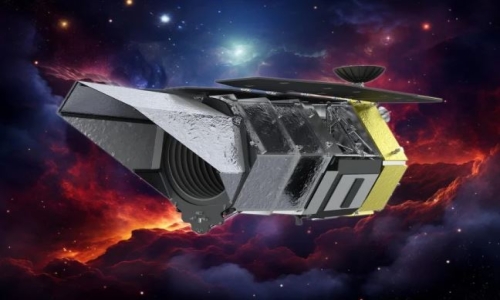
NASA’
 9:3:43
2018-11-05
9:3:43
2018-11-05
10 benefits of Marriage in Islam
7:5:22
2019-04-08
benefits of reciting surat yunus, hud &
9:45:7
2018-12-24
advantages & disadvantages of divorce
11:35:12
2018-06-10
6:0:51
2018-10-16
9:42:16
2022-10-19
6:14:3
2023-01-18
9:30:2
2021-11-12
7:34:7
2023-02-28
2:11:12
2022-10-15
bahlool & the throne of haroun rashid
8:20:35
2018-06-21
7:26:19
2022-04-08
5:41:46
2023-03-18
| LATEST |
 HOME
HOME