الوضع الليلي


 10:27:2
  2024-03-04
  2888
2888
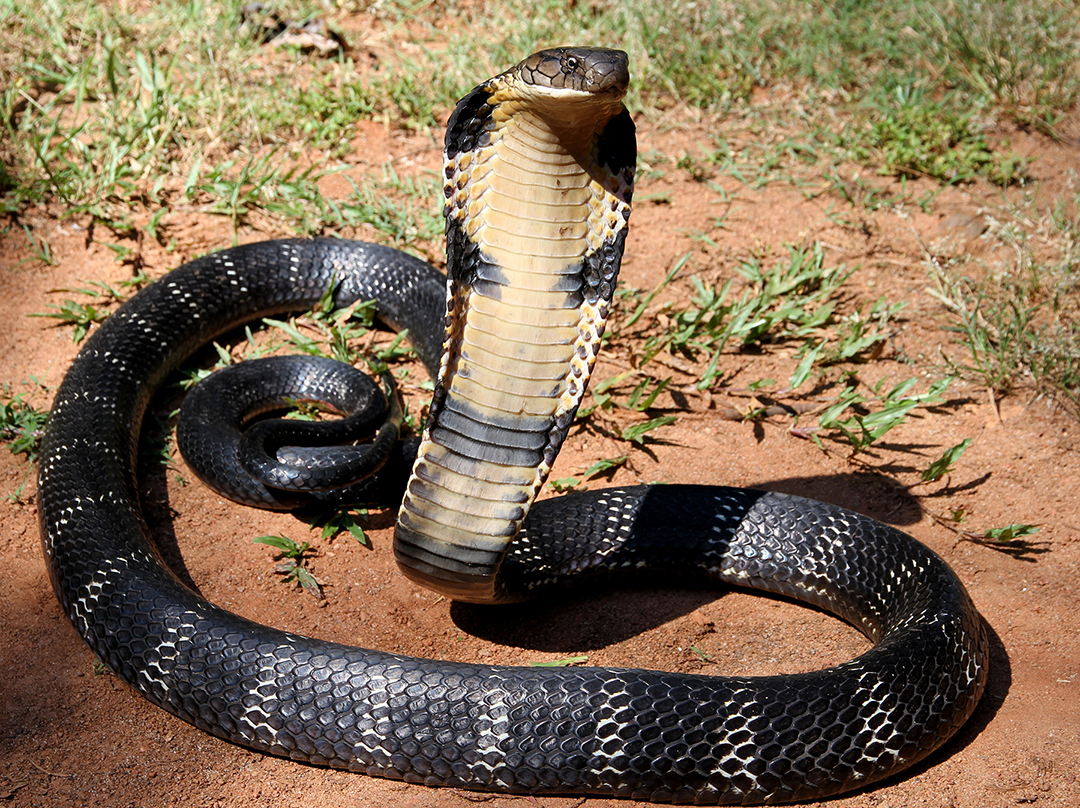
The king cobra—one of the most venomous snakes on the planet—can literally "stand up" and look a full-grown person in the eye. When confronted, they can lift up to a third of its body off the ground and still move forward to attack.
Fortunately, king cobras are shy and will avoid humans whenever possible. It will also flare out its iconic hood and emit a hiss that sounds almost like a growling dog.
King cobras can reach 18 feet in length, making them the longest of all venomous snakes.
Their venom is not the most potent among venomous snakes, but the amount of neurotoxin they can deliver in a single bite— up to two-tenths of a fluid ounce—is enough to kill 20 people, or even an elephant. King cobra venom affects the respiratory centers in the brain, causing respiratory arrest and cardiac failure.
King cobras live mainly in the rain forests and plains of India, southern China, and Southeast Asia, and their coloring can vary greatly from region to region. They are comfortable in a variety of habitats, including forests, bamboo thickets, mangrove swamps, high-altitude grasslands, and in rivers.
This species feeds mainly on other snakes, venomous and nonvenomous. They will also eat lizards, eggs, and small mammals. They are the only snakes in the world that build nests for their eggs, which they guard ferociously until the hatchlings emerge.
King cobras may be best known as the species of choice for the snake charmers of South Asia. Although cobras can hear, they are actually deaf to ambient noises, sensing ground vibrations instead. Snake charming is “often a sad con game in which an exhausted cobra is put on the defensive, yet conditioned (with pain) not to strike the flutist,” Smithsonian’s National Zoo says.
The International Union for Conservation of Nature has listed the king cobra as vulnerable to extinction. These snakes face a variety of threats stemming from human activities. Heavy deforestation in Southeast Asia has destroyed the habitats of many king cobras, while they are also harvested in large numbers for skin, food, and medicinal purposes. They are also collected for the international pet trade. King cobras are also persecuted by humans who fear their menacing reputation.
In Vietnam, the king cobra is a protected species. Protected areas within this snake’s geographic range likely provide some safeguards, and organizations like the King Cobra Conservancy work to better understand the behaviors of the species in order to educate the public and protect the snake’s habitat. The Indian government implants microchips in captive king cobras to allow officials to identify any snakes that have newly been taken captive—which has been outlawed—in order to reduce the illegal wildlife trade.
Reality Of Islam |
|

A new gener
Building a
Now in spac

NASA’
 9:3:43
2018-11-05
9:3:43
2018-11-05
10 benefits of Marriage in Islam
7:5:22
2019-04-08
benefits of reciting surat yunus, hud &
9:45:7
2018-12-24
advantages & disadvantages of divorce
11:35:12
2018-06-10
6:0:51
2018-10-16
a hero waters thirsty wild animals
9:4:9
2022-01-06
8:30:23
2022-03-03
4:2:19
2022-10-10
1:38:41
2021-12-08
7:59:14
2018-06-21
2:5:14
2023-01-28
the happy life of mankind requirement
6:36:36
2022-01-25
5:41:46
2023-03-18
| LATEST |
 HOME
HOME