الوضع الليلي


 10:48:2
  2024-02-18
  1682
1682
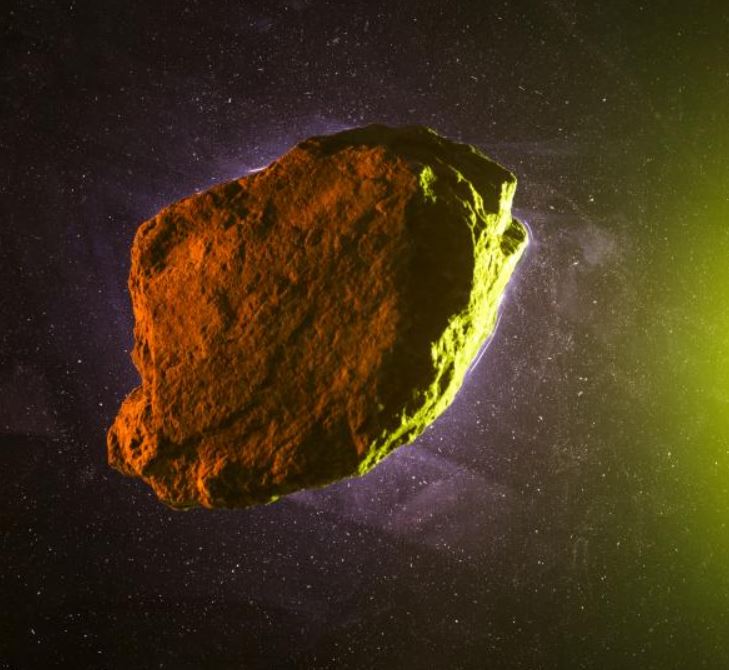
In 2018 the Japanese space agency sent the Hayabusa2 mission to the asteroid Ryugu, As a part of that mission, the spacecraft blasted material off the surface of the asteroid, put it in a bottle, and sent it back to Earth. Two years later that sample landed in the western deserts of Australia.
October 28, 2022
That retrieval contains the most pristine sample of a carbon-rich asteroid ever obtained. Immediately scientists began studying the material, using its chemical clues to help understand the history of our solar system. And now the preliminary results are in, and it looks like Ryugu might be older than the Sun itself.
The first clue is that Ryugu is extremely rich in carbon and organic materials which appear to never have been subjected to high temperatures. That means that Ryugu must have originally formed in the outskirts of the solar system, at least beyond the orbit of Jupiter. Any closer and our young Sun would have partially melted it and altered its chemical makeup.
The second clue is that many of the chemicals found inside Ryugu feature water, which means that the asteroid once had a lot of water ice in its makeup. Again, if Ryugu formed too close to the Sun, the ice would have vaporized, leaving no water to find its way into various interesting chemical combinations.
While astronomers had long suspected that asteroids like Ryugu formed far away from the Sun, there was no way to prove it until now, because any asteroid material that we would study had to first fall through our atmosphere at tens of thousands of miles per hour. This process alters the asteroids so much that it’s difficult to tell what the asteroid was originally like. But with Ryugu, we finally got our hands on a clean sample.
All this means that Ryugu, and carbon-rich asteroids like it, formed from the swirling disk of material that surrounded the Sun before it ignited fusion reactions and became a star. In fact, Ryugu probably predates the formation of the planets itself. But shortly after it formed, it got a gravitational kick from Jupiter or Saturn, which sent it and all its friends into the asteroid belt, where it has remained for billions of years.
That’s why astronomers are so interested in these kinds of asteroids. They’re time capsules, giving us a window to see what the solar system was like before it even became our solar system.
Reality Of Islam |
|

A new gener
Building a
Now in spac
NASA’
 9:3:43
2018-11-05
9:3:43
2018-11-05
10 benefits of Marriage in Islam
7:5:22
2019-04-08
benefits of reciting surat yunus, hud &
9:45:7
2018-12-24
advantages & disadvantages of divorce
11:35:12
2018-06-10
6:0:51
2018-10-16
4:25:57
2023-02-11
2:11:12
2022-10-15
8:30:23
2022-03-03
1:34:8
2022-02-01
2:2:13
2022-10-08
12:47:1
2022-12-20
3:43:50
2022-11-05
5:41:46
2023-03-18
| LATEST |
 HOME
HOME