
الوضع الليلي


 10:37:56
 2024-01-29
 2643
In the early days of telescopic astronomy, you could only focus on one small region of the sky at a time.
Careful observations had to be done by hand, and so much of the breakthrough work centered around a particular object in the sky. A nebula or galaxy, quasar or Pulsar.
But over the years we've been able to build telescopes capable of capturing a wide patch of sky all at once, and with automation, we can now map the entire sky.
Early sky surveys took years to complete, but many modern sky surveys can look for changes on the order of weeks or days.
This ability to watch for changes across the sky is changing the way we do astronomy, and it is beginning to yield some interesting results.
As a case in point, an infrared sky survey is revealing hidden stars we hadn't noticed before.
In a series of papers published in the Monthly Notices of the Royal Astronomical Society, the authors have analyzed data from a decade-long survey called the Visible and Infrared Survey Telescope (VISTA).
VISTA allows astronomers to keep an eye on hundreds of millions of stars at infrared wavelengths.
In these works, the team combed through the observations to focus on about 200 stars that showed the most dramatic shifts in brightness. These transient changes are important because they can reveal the subtle dynamics of stars.
One goal of the studies was to look for very young stars.
Stars in the earliest moments of transition toward becoming true fusion-powered stars. And within their selected stars they found 32 erupting protostars. All of them experienced a rapid increase of at least a factor of 40, and some brightened as much as a factor of 300.
The outbursts lasted for months or years, and they seem to occur within the disk of matter surrounding the young stars. Based on the dynamics, these bursts can accelerate the growth of young stars, but they could also make it more difficult for planets to form. They refer to these turbulent protostars as squalling newborns.
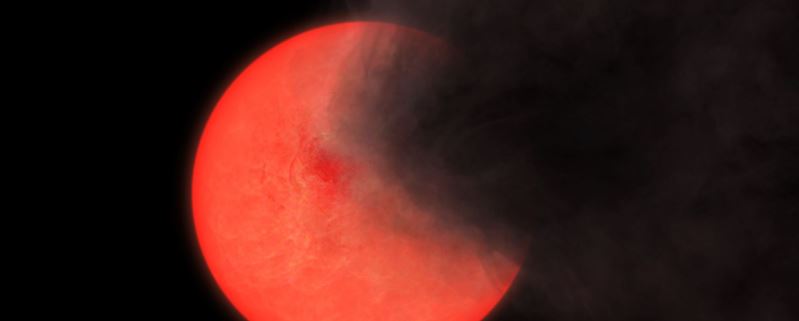
The team also found a surprise. Deep within the center of our galaxy, they found 21 red giant stars with dramatic brightness changes. They turned out to be a new type of red giant known as old smokers.
The center of our galaxy is rich with heavy elements, so these red giants have a high metallicity. As they age, they can cast off clouds of dust that can obscure the star for a time. So the star temporarily fades from view and then re-brightens as the clouds disperse.
This discovery could change our understanding of how heavy elements are released into the galaxy to be used by new stars.
Reality Of Islam |
|

By filling

Scientists

A simple ch

Researchers
 9:3:43
2018-11-05
10 benefits of Marriage in Islam
7:5:22
2019-04-08
benefits of reciting surat yunus, hud &
9:45:7
2018-12-24
advantages & disadvantages of divorce
11:35:12
2018-06-10
6:0:51
2018-10-16
7:6:7
2022-03-21
10:35:40
2022-05-26
a hero waters thirsty wild animals
9:4:9
2022-01-06
2:42:26
2023-02-02
bahlool & the throne of haroun rashid
8:20:35
2018-06-21
2:2:13
2022-10-08
7:32:24
2022-02-14
5:41:46
2023-03-18
| LATEST |
 HOME






















