الوضع الليلي


 12:59:8
 2023-11-04
 1960
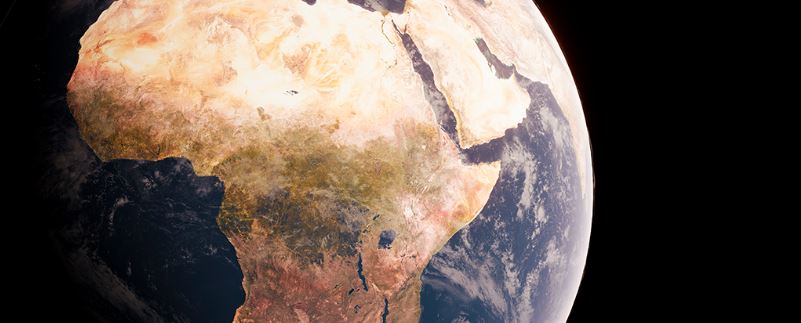
It is a well-known fact that water is the key to life on Earth. But it is less well known that only about 1 percent of all water on the planet is fresh water available to humans, plants, or land-based animals.
The rest is in the oceans, or locked up in polar ice sheets and rocks. In a climate changing world, the global distribution of that 1 percent takes on a whole new significance.
A new study has shown that the Southern Hemisphere has been drying out more than the Northern Hemisphere over the past two decades (2001-2020). The authors suggest the principle cause is the weather phenomenon known as El Niño, which occurs every few years when ocean water in the eastern Pacific is warmer than usual.
The findings are based on data from satellites and measurements of river and stream flows, which enabled the authors to model and calculate changes in water availability. Water availability is the net difference between the amount of water supplied to the landscape, in the form of rainfall on land, and the water removed to the atmosphere by general evaporation or by plants through their leaves.
Even though the Southern Hemisphere has only a quarter of the global land area (excluding Antarctica), it appears to have a substantially greater effect on global water availability than the Northern Hemisphere.
The new analysis reveals a strong decrease in water availability in South America, most of Africa, and central and northwestern Australia. However, some regions such as the southern part of South America will have more water available.
By contrast, despite significant variations between regions, the study suggests water availability in the Northern Hemisphere is more or less balanced. This is in part due to extensive human influences such as irrigation, dams and food production. Such factors are more relevant in the Northern Hemisphere since about 90 percent of the world population lives there.
But why does any of this rather technical modeling about water availability and drying matter? What are some possible implications if the Southern Hemisphere is drying out more than the Northern?
Part of the answer lies in the regions likely to experience increased drying. South America includes the Amazon rainforest, which is a key regulator for the climate, as well as a globally important habitat for species and home to many Indigenous communities.
Drying of the rainforest would reduce vegetation and increase the risk of fire. This would be bad news for humans and animals that live in the forest, and has the potential to release billions of tons of carbon currently locked into forest vegetation and soils.
South America is also a major agricultural exporter of soybeans, sugar, meat, coffee and fruits for the global market. Changes in water availability will increase stress on food systems globally.
Drying across most of Africa is also a real challenge. This huge continent has many climatic zones and socio-economic contrasts, with often limited resources to mitigate and adapt.
Pressures on food systems and habitats will create additional stresses across the continent which is already suffering from increases in global food prices linked to inflation and the war in Ukraine.
Yields of the staple cassava have been declining due to droughts. And exports such as coffee and cocoa could also be reduced, leading to a spiral of loss of livelihoods, poverty and hunger.
North-west Australia is one of the country's great wildernesses. But it would be a major error to consider the region "empty" and therefore unimportant in terms of drying. (Like most environmental issues and concerns, it is rarely advisable to isolate one aspect from another.)
Drying will change vegetation patterns and further increase temperatures, which could be above 35°C for large parts of the year by 2100 if emission rates continue to be high. This would have severe effects on the health of humans and habitats.
Similarly, drying in central Australia has knock-on effects on weather and climate for coastal areas where most of Australia's major cities and population are situated. Drying trends are also being experienced in the south-west and south-east of the country leading to habitat stresses and change, wildfires, depleted rivers and impacts on human health, especially in urban areas.
As with many aspects of climate, the exact nature and scale of changes and impacts are hard to predict or model at local or regional scales. But this new paper points to clear shifts in patterns and complex climate processes in the Southern Hemisphere which will reduce water availability during El Niño events.
Drying will generate additional stresses on habitats and species in key regions. It will also impact human populations with varying capacities to adapt and, ultimately, our global food systems. Although the Southern Hemisphere is mostly water, what happens there really matters for the whole planet.
Reality Of Islam |
|

By filling

Scientists

A simple ch

Researchers
 9:3:43
2018-11-05
10 benefits of Marriage in Islam
7:5:22
2019-04-08
benefits of reciting surat yunus, hud &
9:45:7
2018-12-24
advantages & disadvantages of divorce
11:35:12
2018-06-10
6:0:51
2018-10-16
10:35:40
2022-05-26
4:25:57
2023-02-11
7:26:19
2022-04-08
5:58:12
2021-12-18
1:34:8
2022-02-01
9:39:36
2022-12-28
2:11:12
2022-10-15
5:41:46
2023-03-18
| LATEST |
 HOME