
الوضع الليلي


 4:26:5
 2023-10-16
 2231
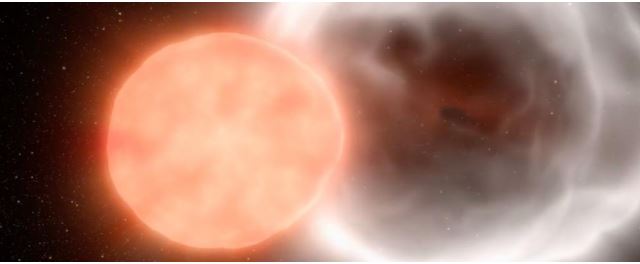
For the first time, artificial intelligence (AI) has searched for, detected, confirmed, classified, and announced a supernova discovery without any human intervention.
An international team of scientists developed a new Al tool called Bright Transient Survey Bot (BTSbot), using over 1.4 million images from nearly 16,000 sources to train its machine-learning algorithm.
Northwestern University reports that the new system allows automation of the entire star explosion discovery process, which not only eliminates human error but also dramatically increases speed.
"Ultimately, removing humans from the loop provides more time for the
research team to analyze their observations and develop new hypotheses to explain the origin of the cosmic explosions that we observe," says Northwestern astronomer Adam Miller, one of the lead researchers in the development of BTSbot.
"This significantly streamlines large studies of supernovae," adds Northwestern's Nabeel Rehemtulla, an astronomer who co-led the development with Miller, "helping us better understand the life cycles of stars and the origin of elements supernovae create, like carbon, iron and gold."
BTSbot detected the newly discovered supernova named SN2023tyk in data from the Zwicky Transient Facility (ZTF), a robotic camera in California that scans the northern sky every two days.
To put the pace into perspective, ZTF imaged the cosmic blast in the night sky on October 3, and BTSbot found the supernova in ZTF's data on October 5. Upon communicating with other robotic instruments, the BTSbot was able to confirm the discovery and classify the event as a Type la supernova, publicly sharing the report on October 7.
"The ZTF has been operating for the past six years, and, during that time, I and others have spent more than 2,000 hours visually inspecting candidates and determining which to observe with spectroscopy," says astronomer Christoffer Fremling from the California Institute of Technology (Caltech).
"Adding BTSbot to our workflow will eliminate the need for us to spend time inspecting these candidates."
Though supernovae are bright and energetic events, they're not that common, or simple to spot. Traditional methods of detection rely on astronomers to visually inspect large volumes of data from robotic telescopes that continuously scan the night sky for new sources of light.
"Automated software presents a list of candidate explosions to humans, who spend time verifying the candidates and executing spectroscopic observations," Miller explains.
"We can only definitively know that a candidate is truly a supernova by collecting its spectrum - the source's dispersed light, which reveals elements present in the explosion."
This is a time-consuming process, and it's estimated that astronomers have only discovered a small fraction of all supernovae that occur in the Universe.
BTSbot automatically asked another robotic instrument called the Spectral Energy Distribution Machine (SEDM) to conduct extensive observations of the potential supernova in order to collect its spectrum. After obtaining this spectrum, SEDM sent it to Caltech's SNlascore (developed by Fremling) to classify the supernova.
Type la supernovae are particularly important to astronomers because they can be used to measure the expansion of the Universe.
"The simulated performance was excellent, but you never really know how that translates to the real-world until you actually try it," says Rehemtulla. "Once the observations from SEDM and the automated classification came in from SNlascore, we felt a huge wave of relief."
The ability to scan the night sky for new objects much more efficiently and effectively could allow discovery of many new supernovae. BTSbot could free up astronomers to focus on interpreting the data and providing valuable insights into the evolution of stars and galaxies.
"Once everything is turned on and working properly, we don't actually do anything," says Rehemtulla. "We go to sleep at night, and, in the morning, we see that BTSbot, and these other Als unwaveringly do their jobs."
Reality Of Islam |
|

By filling

Scientists

A simple ch

Researchers
 9:3:43
2018-11-05
10 benefits of Marriage in Islam
7:5:22
2019-04-08
benefits of reciting surat yunus, hud &
9:45:7
2018-12-24
advantages & disadvantages of divorce
11:35:12
2018-06-10
6:0:51
2018-10-16
10:35:40
2022-05-26
8:4:21
2022-01-08
12:47:1
2022-12-20
10:43:56
2022-06-22
11:11:59
2023-02-01
3:18:29
2022-12-24
6:14:3
2023-01-18
5:41:46
2023-03-18
| LATEST |
 HOME






















