الوضع الليلي


 3:35:23
  2023-09-13
  3734
3734
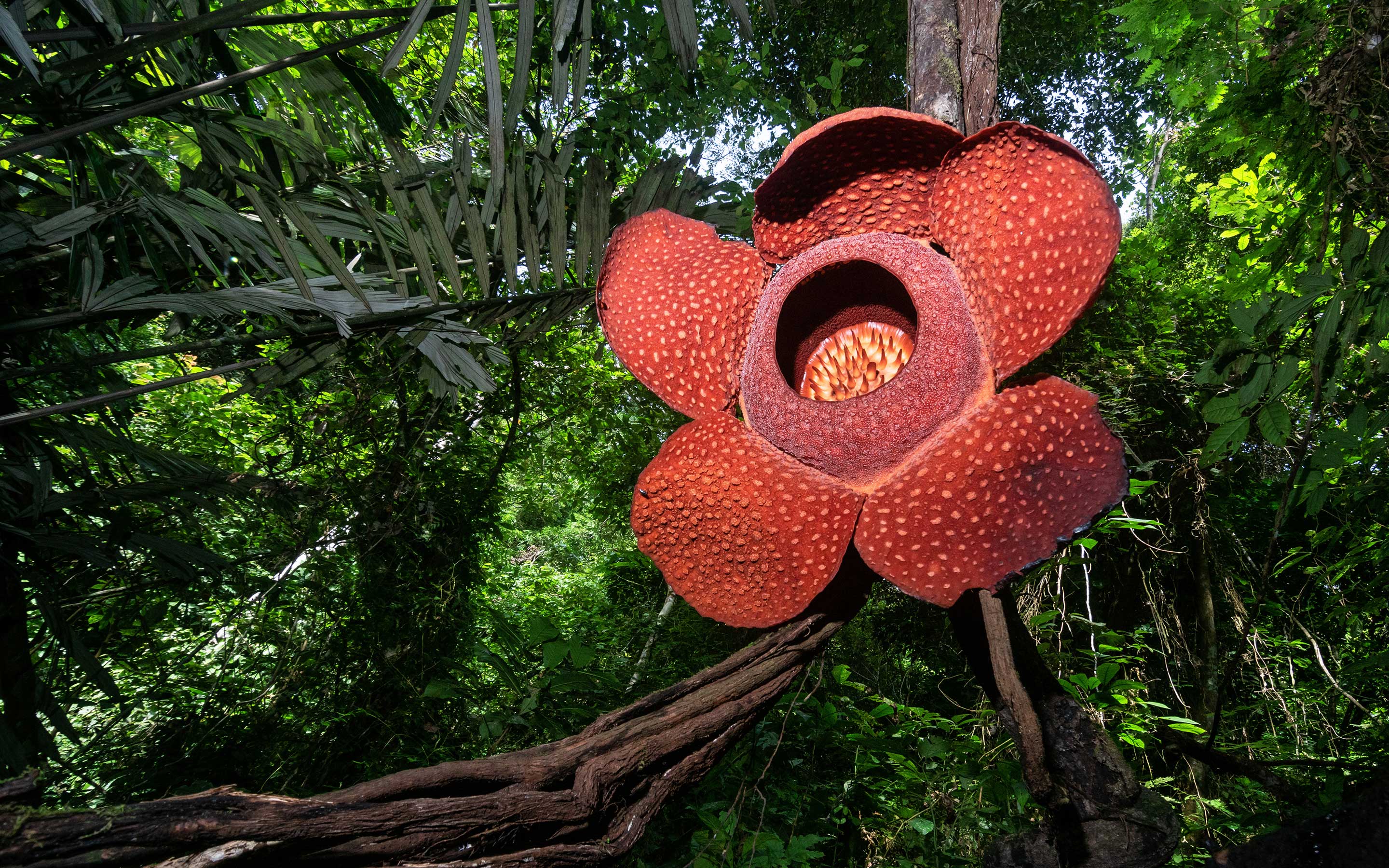
The Corpse Flower (Amorphophallus titanum) is the largest unbranched inflorescence in the plant kingdom. It can grow more than 8 feet tall, blooms for only 1 to 3 days every year or so, and boasts a powerful stench when it blooms, earning the flower its putrid name.
The Anatomy of the Titan Arum
The size of the Corpse Flower bloom is probably its greatest attraction. The tallest flowering specimen at The Huntington—aptly named Stankosaurus Rex—measured over 8 feet tall (98 inches). The world record holder comes in at over 12 feet tall. The “tuber,” which is actually a corm, can weigh over 300 pounds and the solitary umbrella-like leaf can be over 15 feet tall. But it’s the rotting flesh smell of the flowers that makes this plant so memorable and notorious. Adding to the mystique is the ephemeral nature of such a massive flowering effort, lasting only two to three days, and the rarity of seeing a specimen in bloom at any time, anywhere.
Corpse Flower Life Cycle
When the Titan Arum blooms, it comes straight out of the soil from an underground corm, looking like a giant bud without any foliage. But the plant does produce a single, giant leaf when it isn’t in bloom. However, you might not recognize it as a leaf: A mature plant will produce a leaf about 12 feet tall, consisting of a smooth stem topped with a fringe of leaflets, resembling a slender, green palm tree. Several of them are on display in The Huntington’s Rose Hills Foundation Conservatory for Botanical Science. The leaf can last longer than a year before it dies away.
What is often referred to as the plant’s flower is an inflorescence, a specialized structure that supports small individual flowers. The Corpse Flower produces the most massive unbranched inflorescence of any flowering plant. In common to all members of the aroid family (Araceae), the inflorescence consists of an outer protective sheath (spathe) that surrounds a central column bearing small individual flowers (spadix). Better-known members of this family include philodendrons, anthuriums, calla lilies, pothos, and others.
Reality Of Islam |
|

A new gener

Building a

Now in spac

NASA’
 9:3:43
2018-11-05
9:3:43
2018-11-05
10 benefits of Marriage in Islam
7:5:22
2019-04-08
benefits of reciting surat yunus, hud &
9:45:7
2018-12-24
advantages & disadvantages of divorce
11:35:12
2018-06-10
6:0:51
2018-10-16
6:14:3
2023-01-18
2:33:4
2023-02-15
9:50:37
2023-02-28
8:15:37
2023-02-16
7:32:24
2022-02-14
2:11:12
2022-10-15
8:39:51
2022-09-23
5:41:46
2023-03-18
| LATEST |
 HOME
HOME