الوضع الليلي


 1:32:44
  2023-07-25
  4814
4814
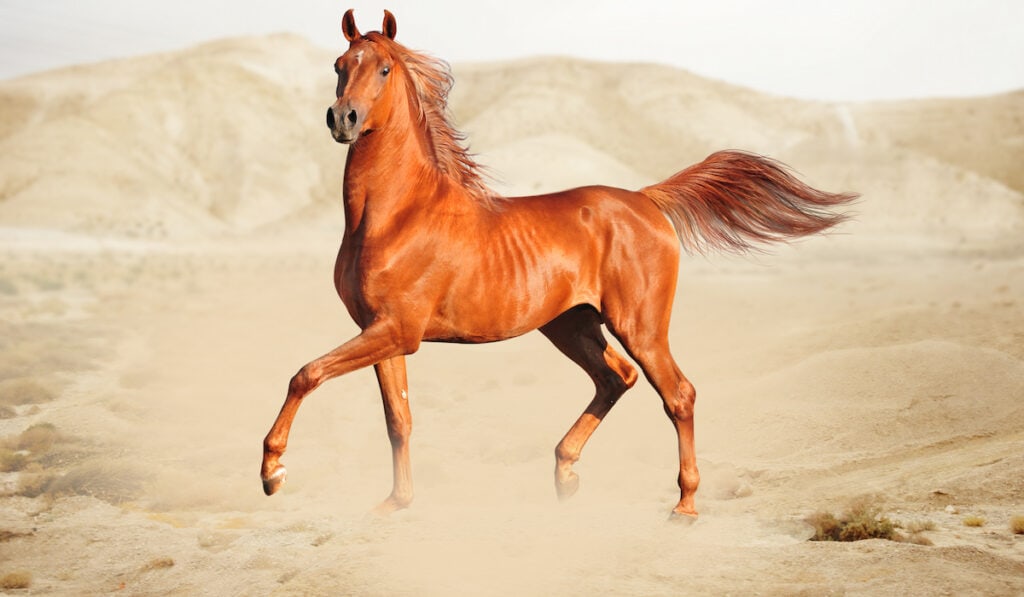
Arabian horse, earliest improved breed of horse, valued for its speed, stamina, beauty, intelligence, and gentleness. The breed’s long history has been obscured by legend, but it had been developed in Arabia by the 7th century CE. The Arabian horse has contributed its qualities to most of the modern breeds of light horses.
The Arabian breed is a compact, relatively small horse with a small head, protruding eyes, wide nostrils, marked withers, and a short back. It usually has only 23 vertebrae, while 24 is the usual number for other breeds. The horse’s average height is about 15 hands (60 inches, or 152 cm), and its average weight ranges from 800 to 1,000 pounds (360 to 450 kg). It has strong legs and fine hooves. The coat, tail, and mane are of fine, silky hair. Although many colors are possible in the breed, gray prevails. The most famous stud farm is in the region of Najd, Saudi Arabia, but many fine Arabian horses are now bred elsewhere.
Reality Of Islam |
|

A new gener

Building a

Now in spac

NASA’
 9:3:43
2018-11-05
9:3:43
2018-11-05
10 benefits of Marriage in Islam
7:5:22
2019-04-08
benefits of reciting surat yunus, hud &
9:45:7
2018-12-24
advantages & disadvantages of divorce
11:35:12
2018-06-10
6:0:51
2018-10-16
the happy life of mankind requirement
6:36:36
2022-01-25
6:14:17
2018-06-21
5:58:12
2021-12-18
bahlool & the throne of haroun rashid
8:20:35
2018-06-21
allah will not answer all your prayers
6:56:28
2022-01-01
12:10:56
2022-11-17
2:34:48
2022-01-18
5:41:46
2023-03-18
| LATEST |
 HOME
HOME