الوضع الليلي


 3:31:16
  2023-07-19
  1379
1379
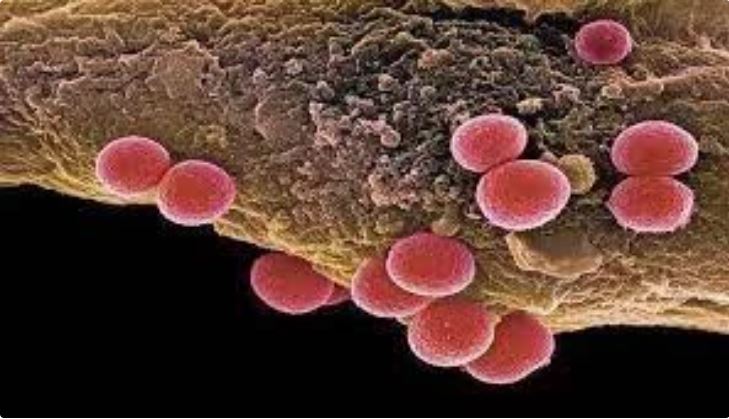
We all know that excessive exposure to the sun, tobacco and pollution is harmful to our skin. But could the rate at which skin ages is due to the bacteria that live on it?
This is one of the theories being investigated by scientists, as they study the skin microbiome — the collection of microorganisms that live on the surface of the skin.
And many of us are now familiar with our gut microbiome — the mix of bacteria, viruses, and fungi that inhabit our guts and play a vital role in immunity and health.
Now, it looks like the mix of insects that live on our skin may be important to skin health — and how fast we age, obviously.
Increasingly, evidence suggests a relationship between the composition of people's skin microbiome and conditions such as psoriasis, acne and dermatitis.
As one study published in the journal Frontiers in Cellular and Infection Microbiology last year reported: "Current knowledge has shown that bacterial, fungal, and viral species are under- or over-expressed in many skin diseases when compared to healthy skin."
Research like this has already helped deliver treatments for certain conditions, explains dermatologist Dr. Jason Thompson, chief medical officer of prescription skincare brand Skin + Me: “The antibiotic clindamycin is applied topically to target acne-causing bacteria. Antifungals such as ketoconazole target malassezia fungi associated with seborrheic dermatitis."
And while there is less data on the differences between young and aging skin's microbiomes, a collaboration between cosmetics giant Chanel Paris skincare laboratory and the Jackson Laboratory, a research institution in the US, helps shed light on this.
The scientists analyzed the bacteria on the cheeks of 51 women - a group between the ages of 20 and 26, and a larger group, between the ages of 54 and 60 - as well as the quantity and quality of collagen (the protein that makes skin plump).
Not only did younger skin tend to have more moisture and stronger collagen (as expected), but it also had different bacteria.
For example, Cutibacterium, commonly found in the oil produced by the skin and linked to acne, was more prevalent in younger people.
Meanwhile, the percentage of Staphylococcus epidermidis, which is commonly found on the skin and causes no problems in healthy people but can cause infections in immunocompromised people, was higher in older people than in younger people, according to the study published on biorxiv.org
"We found many changes in the diversity and types of different microbes on aging facial skin," says Julia Oh, lead study author. "Other studies have shown that the skin microbiome can influence skin barrier repair," she adds.
But do these new findings matter? After all, we know that the skin produces less sebum as we age, so it seems only natural that the bacteria associated with sebum would decrease because they have less 'feeding'.
Collagen is also known to deplete with age - but does the bacteria on our skin play a role?
"Collagen and elastin and the structures they produce are much deeper in the skin than the microbiome is on the skin's surface," says Dr Kathryn Borisevich, a dermatologist at Dr David Jack's private practice in London.
However, we know that these structures can be stimulated by an immune response and so it is possible that by working with the microbiome, which we know has an important role to play within the skin's immune system, it may have an effect on collagen and elastin levels.
Dr Jill Westgate, a research scientist at the University of Bradford's Center for Skin Sciences, says that while this research is still in its early stages, overall, the evidence suggests that it is the skin that dictates the composition of the microbiome and not the other way around. We know that the environment determines what grows there - in this case, the most likely explanation is that age changes the skin, which in turn changes the microflora [that is, bacteria and other microorganisms].
However, this does not mean that the microbiome does not have a role to play in skin aging.
It is known that the microflora present in the skin helps to train the immune system. If the microflora is altered, this protection may be compromised.
With age, immune system function declines, so communication between the skin's microflora and the immune system is less effective. The result is the skin is injured more easily and takes longer to heal.
But even if it were possible to pinpoint the exact microbiome of young skin, creating a lasting change in an individual's microbiome is not easy.
Reality Of Islam |
|
A new gener

Building a

Now in spac

NASA’
 9:3:43
2018-11-05
9:3:43
2018-11-05
10 benefits of Marriage in Islam
7:5:22
2019-04-08
benefits of reciting surat yunus, hud &
9:45:7
2018-12-24
advantages & disadvantages of divorce
11:35:12
2018-06-10
6:0:51
2018-10-16
6:14:17
2018-06-21
8:30:23
2022-03-03
12:10:56
2022-11-17
7:26:19
2022-04-08
7:6:7
2022-03-21
10:47:11
2022-11-22
bahlool & the throne of haroun rashid
8:20:35
2018-06-21
5:41:46
2023-03-18
| LATEST |
 HOME
HOME