الوضع الليلي


 8:8:15
  2018-09-19
  2396
2396
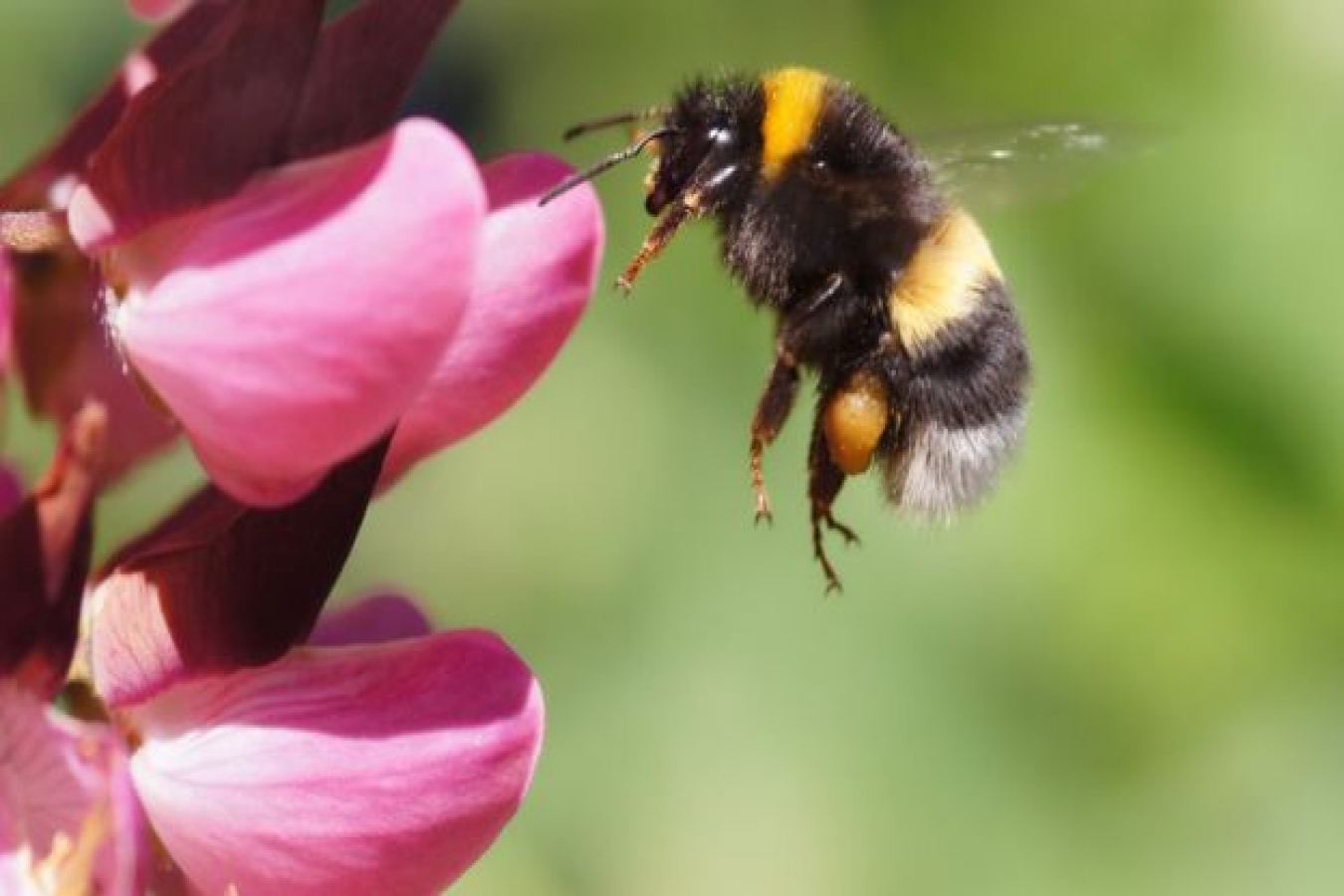
A new study reveals that wasps are largely disliked by the public, whereas bees are highly appreciated.
The researchers involved say that this view is unfair because wasps are just as ecologically useful as bees.
The scientists suggest a public relations campaign to restore the wasps' battered image.
They'd like to see the same efforts made to conserve them as there currently are with bees.
The survey of 750 people from 46 countries has been published in Ecological Entomology.
Despised by picnickers, feared for their painful stings - wasps are among the least loved of insects according to the new study.
In the survey, participants were asked to rate the insects on a scale which ran from minus five, representing a strongly negative emotion to plus five, representing a strongly positive one.
The vast majority of responses for bees were plus 3 or above, whereas it was the complete reverse for wasps, with the vast majority rating their feelings minus three or below.
When asked to think of words associated with bees, the most popular for bees were "honey", "flowers" and "pollination".
For wasps the most common words that came to mind were "sting", "annoying" and "dangerous".
However wasps also pollinate flowers as well as killing pests and are just as important to the environment as bees.
The problem, according to Dr Seirian Sumner, of University College London, who led the research, is that wasps have had a bad press.
The public are unaware of all the good things they do so they are regarded as nuisances rather than an important ecological asset.
"People don't realise how incredibly valuable they are," she told BBC News.
"Although you might think they are after your beer or jam sandwich - they are, in fact, much more interested in finding insect prey to take back to their nest to feed their lavae."
Dr Sumner also discovered that there is a lack of research into the mostly positive impact wasps have on the environment.
She analysed scientific research papers and conference presentations for bees and wasps over the last 37 years and 16 years respectively.
Of 908 papers sampled, only 2.4% wasp publications were found since 1980, compared to 97.6% (886 papers) bee publications. Of the 2,543 conference abstracts on bees or wasps from the last twenty years, 81.3% were on bees.
This lack of research is stalling efforts to develop conservation strategies for wasps, whose numbers are declining because of loss of habitat and climate change according to Dr Alessandro Cini of the University of Florence, who collaborated on the study.
Reality Of Islam |
|

A new gener

Building a

Now in spac

NASA’
 9:3:43
2018-11-05
9:3:43
2018-11-05
10 benefits of Marriage in Islam
7:5:22
2019-04-08
benefits of reciting surat yunus, hud &
9:45:7
2018-12-24
advantages & disadvantages of divorce
11:35:12
2018-06-10
6:0:51
2018-10-16
9:42:16
2022-10-19
bahlool & the throne of haroun rashid
8:20:35
2018-06-21
8:3:0
2018-06-21
4:25:57
2023-02-11
2:5:14
2023-01-28
5:58:12
2021-12-18
9:30:2
2021-11-12
5:41:46
2023-03-18
| LATEST |
 HOME
HOME