الوضع الليلي


 4:51:56
  2019-12-01
  1635
1635
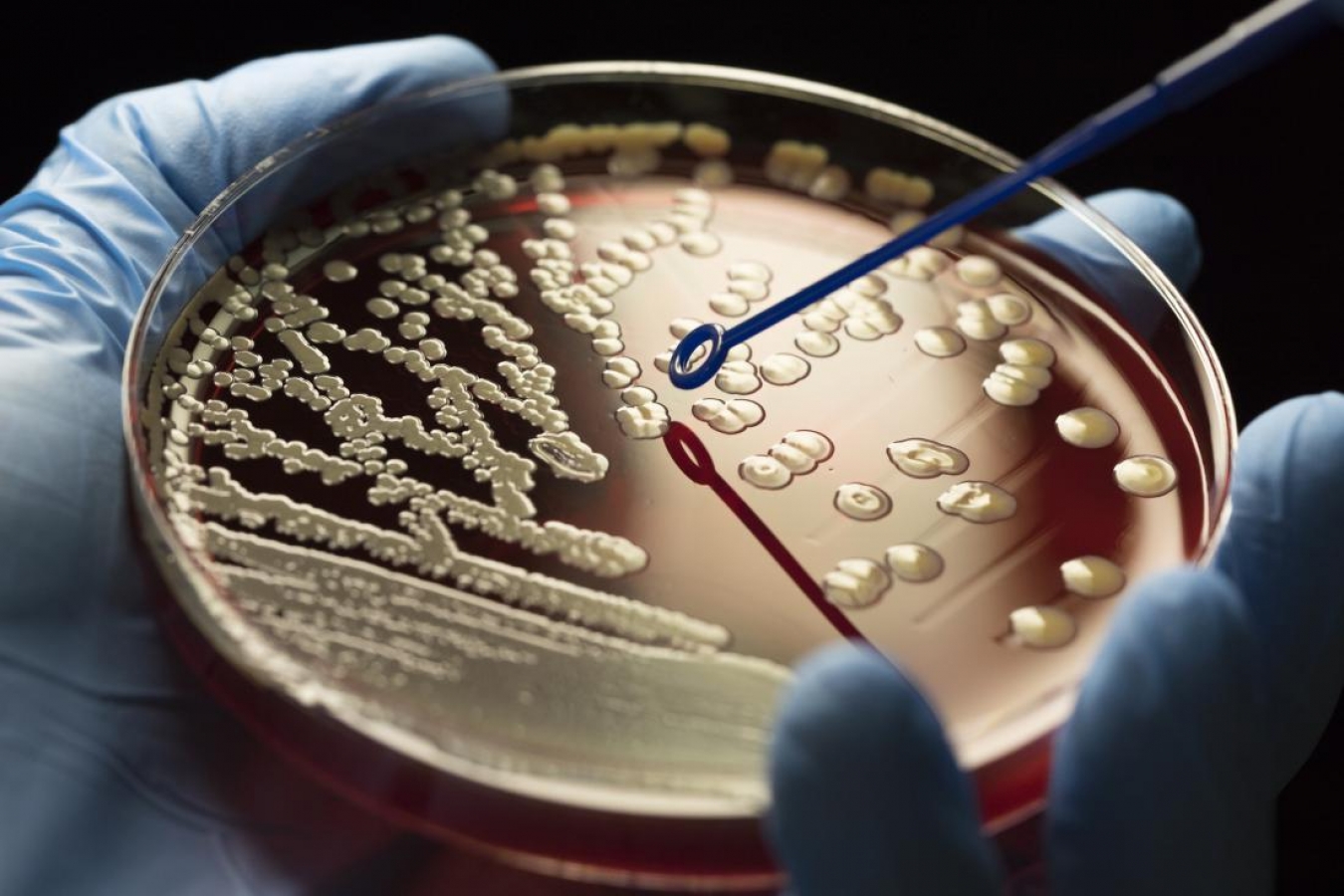
Historically, doctors used metals to treat infections. Researchers think that this treatment method may be worth a modern reexamination.
As an increasing number of bacteria develop antibiotic resistance, scientists are looking beyond this family of medications that has served us so well up until now.
As the usefulness of antibiotics begins to wane, there is an urgent need to develop new ways to treat infections.
Now, researchers at the University of Connecticut (UCONN) in Storrs say they may have found a way forward – by looking back at how doctors treated infections before the advent of antibiotics. Kumar Venkitanarayanan led the research team.
"In the olden days, metals were used as antimicrobial treatments, so we decided to revisit those to see if they could be applied to modern-day treatments." Kumar Venkitanarayanan
Venkitanarayanan and his team have published the encouraging results of their research in the journal Wound Medicine.
A difficult nosocomial infection
Infections contracted by patients while hospitalized for other reasons are especially likely to be antibiotic resistant.
Called "nosocomial infections," they can be very hard to cure and can be fatal. Among the most common nosocomial bacteria is Acinetobacter baumannii (A. baumannii).
According to Venkitanarayanan, "A. baumannii is primarily a nosocomial pathogen impacting those especially with compromised immune systems, the very young, the very old, burn victims, and is also reported in the wounds of combat soldiers."
A. baumannii is adept at outsmarting antibiotics, with an array of mechanisms for evading successful treatment.
Among these is its ability to form self-protective biofilms that facilitate travel to the lungs — sometimes causing pneumonia — and to the urinary tract. In biofilm form, it is also easier for the bacteria to spread to other patients.
Selenium
After assessing a variety of metals and metalloids that doctors historically used to treat infections, the researchers settled on a metalloid, the essential mineral selenium (Se), as a promising candidate for treating A. baumannii.
Antimicrobial selenium is a recognized dietary antioxidant, and the Food and Drug Administration (FDA) recommend it for daily intake.
Other researchers have also found it to be a promising counteragent to pathogens such as Staphylococcus aureus (S. aureus)Trusted Source. Selenium is also an essential micronutrient that helps the immune system function and aids nucleic acid synthesis.
Sneaking up on A. baumannii
Since A. baumannii is such an adaptable opponent, Venkitanarayanan and his colleagues adopted a strategy of disarming the bacteria rather than staging a full-on assault that would threaten its survival and provoke its defense mechanism.
The researchers began by determining the minimum amount of selenium required to inhibit the bacteria's virulence.
To observe selenium's efficacy with A. baumannii, the researchers constructed a model matrix that simulated an infected wound environment containing cultured cells and wound fluids.
They infected areas of their "wound" with A. baumannii and selenium sufficient to inhibit virulence. They infected other samples with A. baumannii alone.
The researchers examined the samples under scanning electron microscopes. They also performed DNA analysis to determine if the selenium produced any genetic changes in the bacteria.
In the selenium samples, the biofilms produced by A. baumannii were severely degraded, diffuse, and structurally unsound.
"There are no clear data for how selenium works," says Venkitanarayanan, but "there appears to be toxicity against the outer membrane of the bacteria, and it might also cause toxicity against the DNA, potentially in genes that are involved in biofilm creation."
Genetic analysis supported this suspicion, showing a reduction, or down-regulation, of genes responsible for biofilm production. Also, the bacteria treated with selenium were no longer as good at sticking to and invading skin cells.
Venkitanarayanan's team has also looked at the use of selenium for addressing other challenging infections, such as enterohemorrhagic Escherichia coli (EHEC) and Clostridium difficile (C. diff).
Venkitanarayanan advocates further exploration into the use of metals and metalloids as a way out of the antibiotic resistance dilemma, even as a stopgap, while researchers investigate and develop other treatments.
"Even if we make use of the old methods in concert with modern antibiotics, it is better than not being able to use anything at all."
Kumar Venkitanarayanan
Reality Of Islam |
|
A new gener
Building a

Now in spac

NASA’
 9:3:43
2018-11-05
9:3:43
2018-11-05
10 benefits of Marriage in Islam
7:5:22
2019-04-08
benefits of reciting surat yunus, hud &
9:45:7
2018-12-24
advantages & disadvantages of divorce
11:35:12
2018-06-10
6:0:51
2018-10-16
5:57:34
2023-03-18
10:43:56
2022-06-22
3:42:22
2021-12-24
8:39:51
2022-09-23
8:21:9
2018-06-21
8:30:23
2022-03-03
9:50:37
2023-02-28
5:41:46
2023-03-18
| LATEST |
 HOME
HOME