الوضع الليلي


 5:52:34
  2019-09-01
  1627
1627
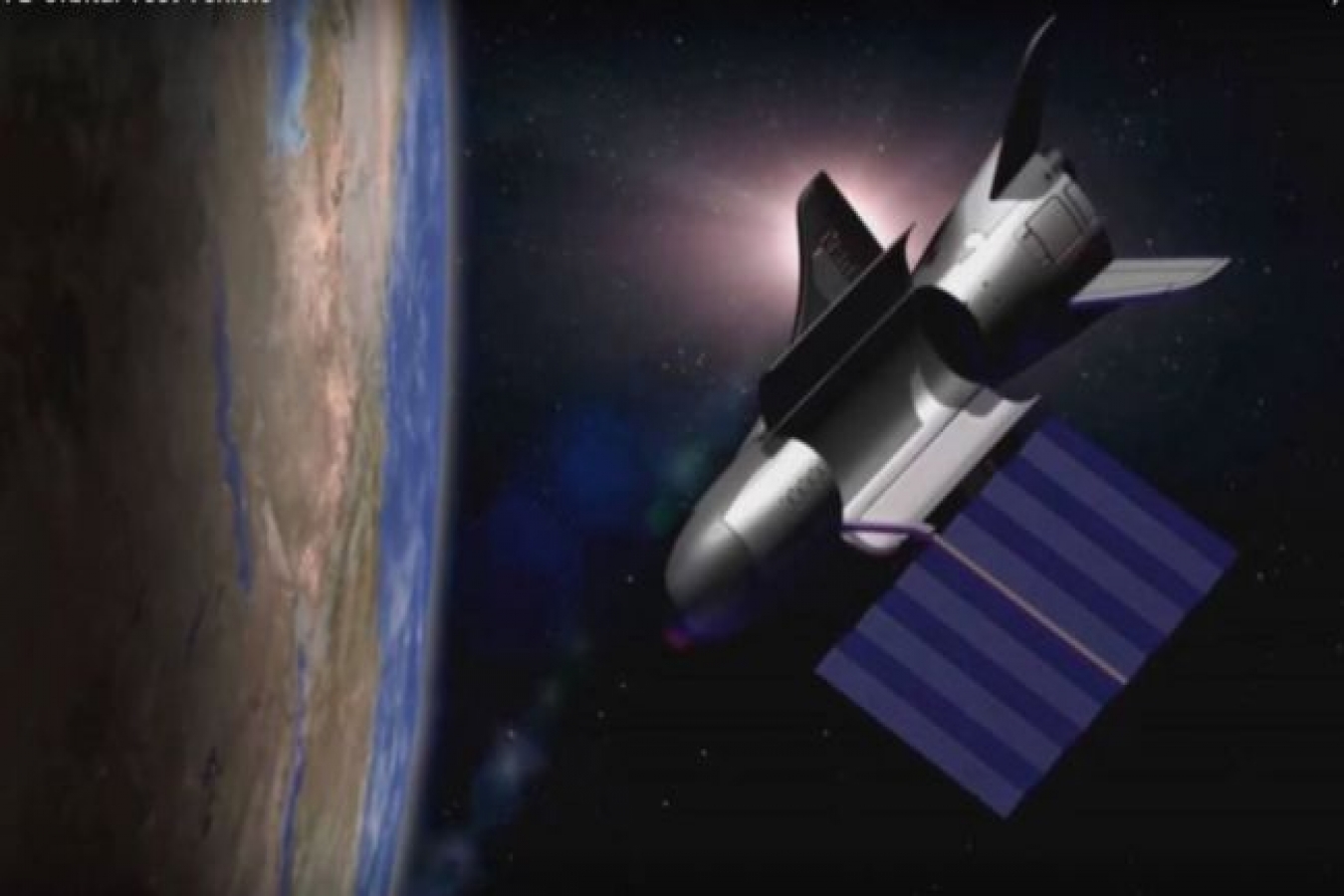
The U.S. Air Force's X-37B space plane just broke its spaceflight-duration record.
At 6:43 a.m. EDT (1043 GMT) today (Aug. 26), the robotic X-37B sailed past the program mark of 717 days, 20 hours and 42 minutes, which was set by the previous mission, known as Orbital Test Vehicle 4 (OTV-4).
The current mission, OTV-5, began on Sept. 7, 2017, with a liftoff atop a SpaceX Falcon 9 rocket. It's unclear what the space plane is doing up there now, or what it has done on past flights; X-37B missions are classified, and the Air Force therefore tends to speak of the vehicle and its activities in general terms.
"The primary objectives of the X-37B are twofold; reusable spacecraft technologies for America’s future in space and operating experiments which can be returned to, and examined, on Earth," Air Force officials wrote in the X-37B fact sheet.
"Technologies being tested in the program include advanced guidance, navigation and control, thermal protection systems, avionics, high temperature structures and seals, conformal reusable insulation, lightweight electromechanical flight systems, advanced propulsion systems, advanced materials and autonomous orbital flight, reentry and landing," the officials added.
The test campaign seems to involve pushing the X-37B's endurance, because each of the five missions has lasted longer than its predecessor. OTV-1 launched in April 2010, and returned to Earth that December after 224 days in space. OTV-2 ran for 468 days, from March 2011 through June 2012. OTV-3 launched in December 2012 and landed in October 2014, racking up 675 days of spaceflight. And OTV-4 landed in May 2017 after nearly 718 days in orbit.
OTV-5 is nowhere near the overall spaceflight-duration record, however. Earth-observation and communications satellites commonly operate for five years or more, as do robotic planetary explorers. NASA's Curiosity rover has been exploring Mars for more than seven years, for example, and the agency's twin Voyager probes are still going strong in interstellar space more than four decades after their launches.
"The primary objectives of the X-37B are twofold; reusable spacecraft technologies for America’s future in space and operating experiments which can be returned to, and examined, on Earth," Air Force officials wrote in the X-37B fact sheet.
"Technologies being tested in the program include advanced guidance, navigation and control, thermal protection systems, avionics, high temperature structures and seals, conformal reusable insulation, lightweight electromechanical flight systems, advanced propulsion systems, advanced materials and autonomous orbital flight, reentry and landing," the officials added.
The test campaign seems to involve pushing the X-37B's endurance, because each of the five missions has lasted longer than its predecessor. OTV-1 launched in April 2010, and returned to Earth that December after 224 days in space. OTV-2 ran for 468 days, from March 2011 through June 2012. OTV-3 launched in December 2012 and landed in October 2014, racking up 675 days of spaceflight. And OTV-4 landed in May 2017 after nearly 718 days in orbit.
OTV-5 is nowhere near the overall spaceflight-duration record, however. Earth-observation and communications satellites commonly operate for five years or more, as do robotic planetary explorers. NASA's Curiosity rover has been exploring Mars for more than seven years, for example, and the agency's twin Voyager probes are still going strong in interstellar space more than four decades after their launches.
Source: Live Science
Reality Of Islam |
|

A new gener
Building a
Now in spac
NASA’
 9:3:43
2018-11-05
9:3:43
2018-11-05
10 benefits of Marriage in Islam
7:5:22
2019-04-08
benefits of reciting surat yunus, hud &
9:45:7
2018-12-24
advantages & disadvantages of divorce
11:35:12
2018-06-10
6:0:51
2018-10-16
10:43:56
2022-06-22
10:55:53
2022-06-13
2:2:13
2022-10-08
7:45:39
2018-06-21
11:11:59
2023-02-01
1:38:41
2021-12-08
2:5:14
2023-01-28
5:41:46
2023-03-18
| LATEST |
 HOME
HOME