الوضع الليلي


 6:3:57
  2019-06-08
  2065
2065
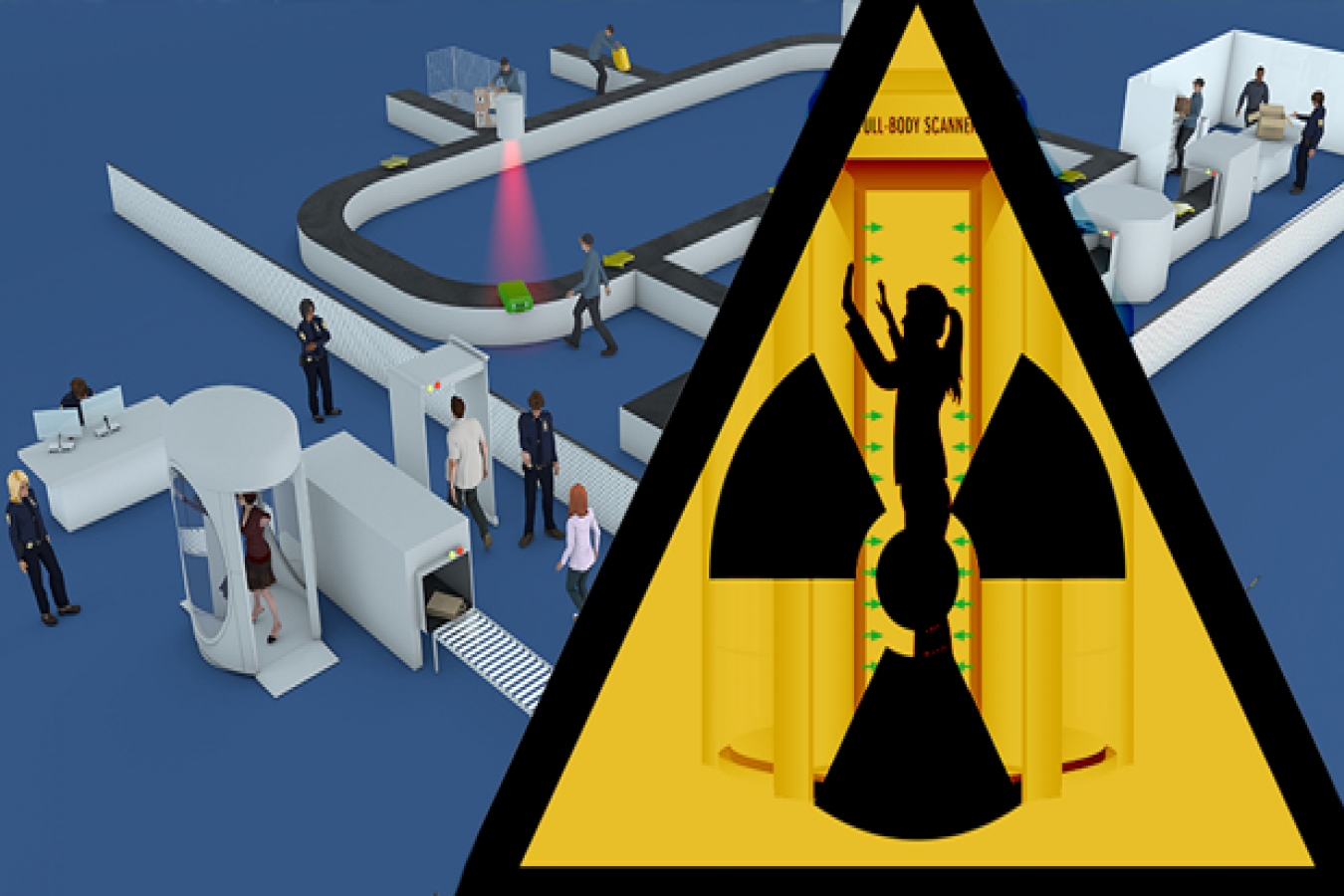
What do granite countertops, bananas and airports have in common?
They're all emitting low-level radiation — constantly. Yet, according to toxicologists, people aren't coming into their offices with concerns about their kitchen renovations. Instead, just one of these sources is a cause of disproportionate anxiety: the security scanners in airports.
Patient concerns are often based on the warnings health care providers have issued regarding medical X-rays. The Food and Drug Administration cautions cautions patients to undergo X-ray imaging only when strictly necessary. But should people also be concerned about the security scanners at airports?
Luckily for health-conscious frequent fliers, there's no need to worry, said Dr. Lewis Nelson, professor and chair of emergency medicine at Rutgers New Jersey Medical School. Radiation is a general term for different kinds of moving electromagnetic energy: ionizing radiation (what X-ray machines emit) and nonionizing radiation (which includes radio and magnetic waves). The key difference between ionizing and non-ionizing radiation is the level of energy they transmit. Ionizing radiation has enough energy to knock electrons away from atoms, creating free radicals; these chemically reactive particles can damage DNA and increase people's risk of cancer.
But ionizing radiation has a real impact on our health only when received at high doses. And in airport X-ray machines, even though about half of the scanners emit ionizing radiation, the dose just isn't high enough to do bodily harm, Nelson said. (Roughly half of scanners use millimeter waves, a form of non-ionizing radiation.)
"It's so tiny that it's inconsequential," he told Live Science.
While patients may be right to be concerned about the number of medical X-rays they receive, the amount of radiation delivered by an airport X-ray is tiny in comparison. A chest X-ray exposes patients to roughly 1,000 times the radiation of an airport scanner. The Health Physics Society estimates that airport X-ray scanners deliver 0.1 microsieverts of radiation per scan. In comparison, a typical chest X-ray delivers 100 microsieverts of radiation, according to a 2008 study published in the journal Radiology.
And travelers are exposed to far more radiation on the flight itself, Nelson said. Every minute on a plane delivers roughly the same dose of radiation as one airport X-ray scan.
“It’s ironic that peoeple afraid of radiation exposure in screening don’t have any qualms about getting on the airplane,” Nelson said.
These scanners emit such a tiny amount of radiation that even if you flew every day for a year, you'd still receive only a fraction of the ionizing radiation you absorb from food, based on dose estimates from NASA.
Most food contains small amounts of the radioactive molecules carbon-14 and potassium-40, according to NASA. In fact, many of the objects and substances we encounter daily emit radiation; the soil, cement sidewalks and buildings, and even the air we breathe are all slightly radioactive.
Compared to all that radiation, an X-ray scanner emits an insignificant amount, Nelson said. That holds true even for people more vulnerable to radiation exposure, such as pregnant women and babies, who receive the same amount of background radiation daily as anyone else.
"The dose makes the poison," Nelson said, "Everything is toxic if you have enough of a dose. The corollary to that is everything's nontoxic if you have a low enough dose."
By: Live Science
Reality Of Islam |
|
A new gener

Building a
Now in spac
NASA’
 9:3:43
2018-11-05
9:3:43
2018-11-05
10 benefits of Marriage in Islam
7:5:22
2019-04-08
benefits of reciting surat yunus, hud &
9:45:7
2018-12-24
advantages & disadvantages of divorce
11:35:12
2018-06-10
6:0:51
2018-10-16
bahlool & the throne of haroun rashid
8:20:35
2018-06-21
10:55:53
2022-06-13
8:21:9
2018-06-21
2:34:48
2022-01-18
6:0:8
2023-03-19
4:25:57
2023-02-11
8:25:12
2022-03-09
5:41:46
2023-03-18
| LATEST |
 HOME
HOME